THE RIDER–WAITE–SMITH DECK · IN ORDER

The Complete 78 Tarot Card Meanings Guide

See the complete deck at a glance, compare upright and reversed meanings, and open a full card guide when you need imagery, spreads, combinations, or responsible reading context.

78cards22Major Arcana56Minor Arcana

HOW TO USE THIS ATLAS

Start with the image, then test the meaning.

Card meanings are not fixed predictions. Notice the visible scene, identify the card’s position in the spread, compare surrounding cards, and connect the interpretation to observable choices or conditions.

  1. 1Observe the image
  2. 2Name the spread position
  3. 3Compare neighboring cards
  4. 4Choose a grounded action

THE COMPLETE DECK

Find a tarot card

Search by card name or filter the deck by arcana and suit.

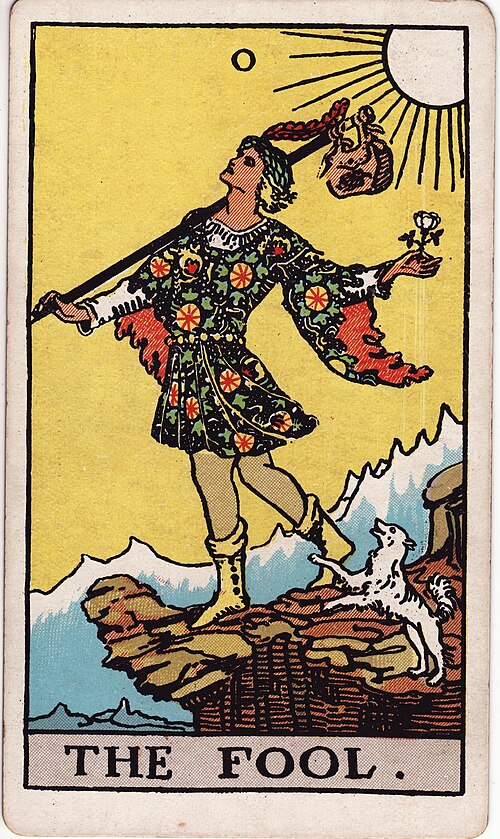
The Fool Rider-Waite-Smith tarot card
01Major Arcana

The Fool

Upright
The central drive of The Fool upright is to let the experience unfold first: to acknowledge that you do not yet have all the answers and enter a new phase with curiosity. Its strengths may include flexibility, rapid learning, the courage to try and learn from mistakes, and…
Reversed
Reversal does not automatically mean something negative. It may indicate a delayed start or hesitation at the threshold because of anxiety about the unknown.
Read the complete card guide →
The Magician Rider-Waite-Smith tarot card
02Major Arcana

The Magician

Upright
The core drive of the upright Magician is to actively mobilise resources: define a goal, identify the tools already available, and use skill, communication, or method to put intention into practice. Its strengths include learning quickly, organising effectively, expressing…
Reversed
A reversed card does not necessarily mean deception or failure. It may indicate that a useful tool is available but not yet being used effectively, that expression is blocked, that intentions have not been clarified, or that the theme remains mainly at the stage of thinking…
Read the complete card guide →
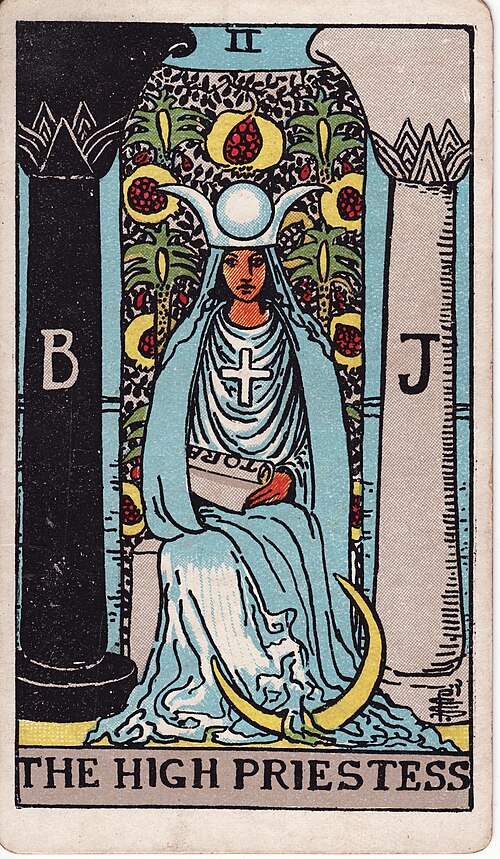
The High Priestess Rider-Waite-Smith tarot card
03Major Arcana

The High Priestess

Upright
The High Priestess often describes a situation in which observation is more useful than immediate display. Core dynamics include waiting for context, noticing patterns, listening to subtle reactions, and allowing an answer to mature.
Reversed
the same theme may be blocked, internalized, excessive, delayed, or redirected. Blockage can look like confusion because too much relevant context is unavailable.
Read the complete card guide →
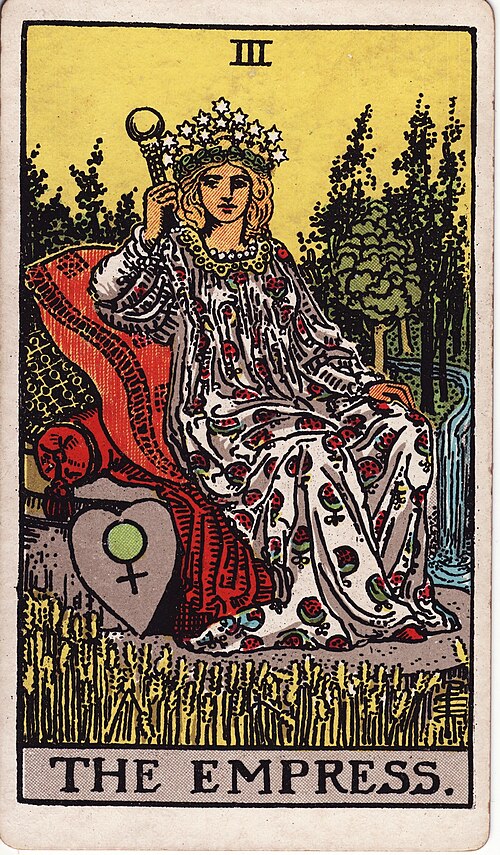
The Empress Rider-Waite-Smith tarot card
04Major Arcana

The Empress

Upright
The Empress describes development through care, consistency, receptivity, and a supportive environment. Core dynamics include creation, fertility in the broad sense, comfort, embodiment, collaboration, and the conversion of an idea into something people can experience.
Reversed
The Empress may point to blocked creativity, neglected needs, internalized self-worth, excess comfort, delay in development, or a change in direction. Blockage can appear as a barren routine, depleted energy, a project without support, or a relationship where care does not…
Read the complete card guide →
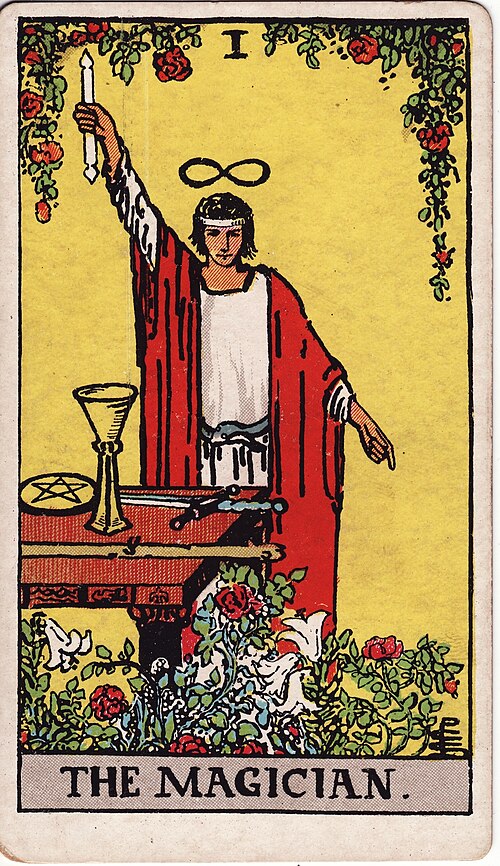
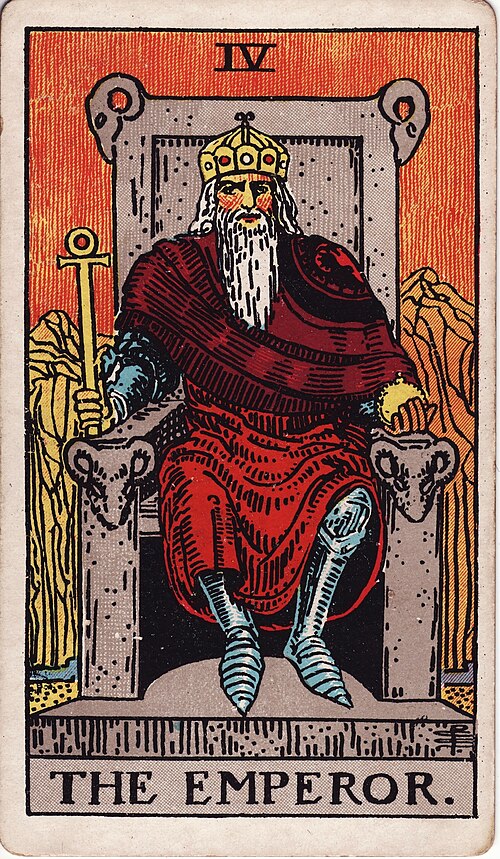
The Emperor Rider-Waite-Smith tarot card
05Major Arcana

The Emperor

Upright
The Emperor points to a need for clear form. The core dynamic is turning intention into a workable system: define the scope, name the decision-maker, set a standard, and make the next obligation visible.
Reversed
does not automatically mean failure or evil. It can show blockage when a plan has no authority, scope, or consistent rule; internalization when the person is policing themselves harshly instead of asking for support; excess when command becomes domination, micromanagement,…
Read the complete card guide →
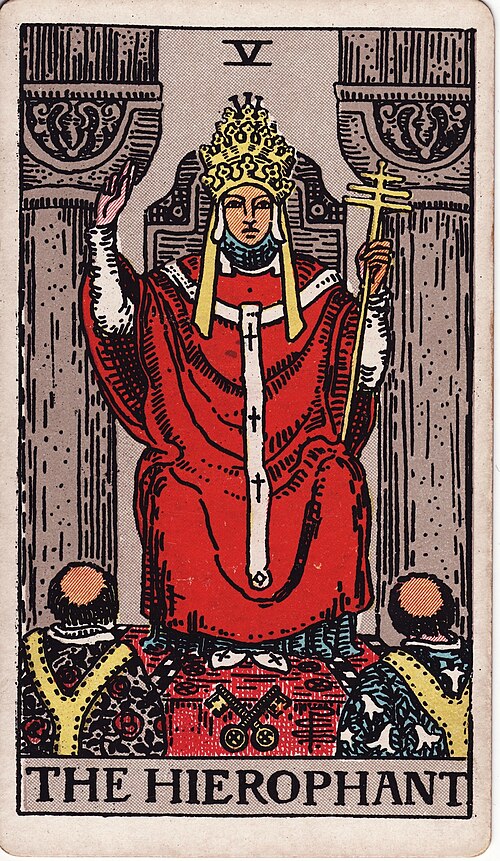
The Hierophant Rider-Waite-Smith tarot card
06Major Arcana

The Hierophant

Upright
The Hierophant highlights learning within a structure: find a trustworthy teacher, name the tradition being used, follow a sound process, or make values explicit before acting. Its strengths include mentorship, continuity, shared language, ethical commitment, ceremony, and…
Reversed
does not automatically mean negative. As blockage, the card can show that a rigid doctrine, gatekeeper, or unclear tradition prevents useful learning.
Read the complete card guide →
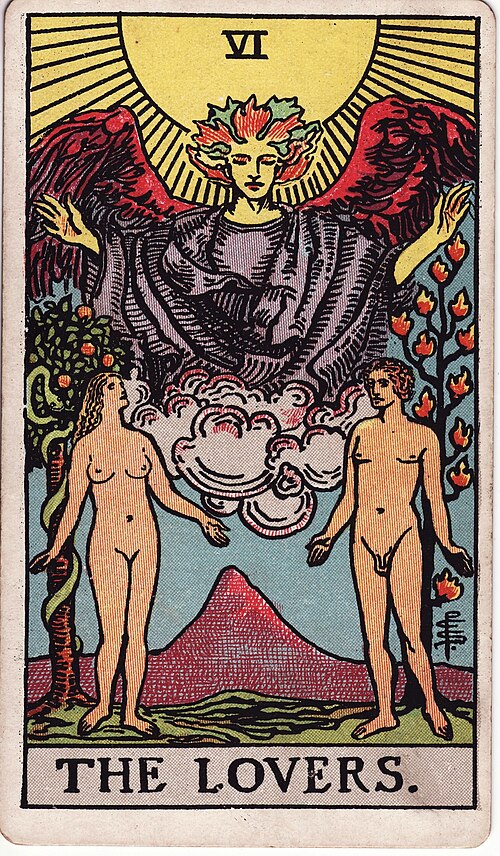
The Lovers Rider-Waite-Smith tarot card
07Major Arcana

The Lovers

Upright
The Lovers can show a meaningful bond, honest conversation, shared values, or a decision that deserves full participation. Its strength is integration: feeling and thought are invited into the same choice, and attraction can become an agreement rather than a projection.
Reversed
The Lovers does not automatically mean a breakup or betrayal. It may show blockage in communication, an internal conflict between desire and principle, or a choice being made to satisfy pressure rather than consent.
Read the complete card guide →
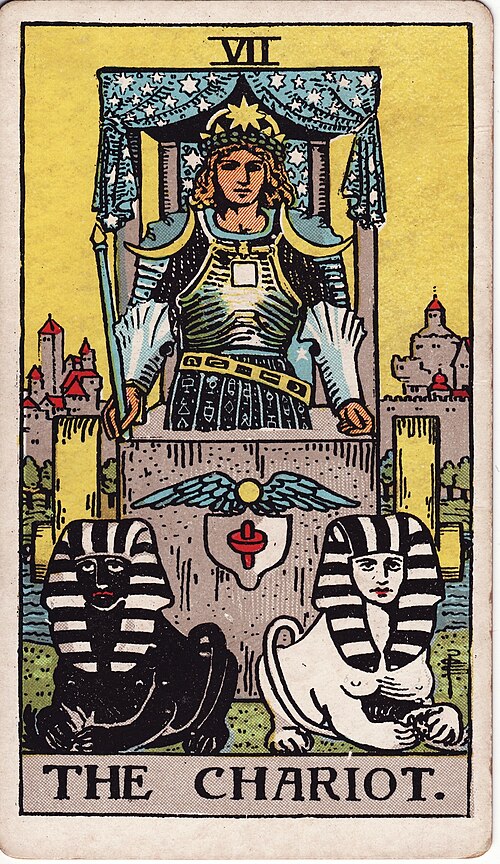
The Chariot Rider-Waite-Smith tarot card
08Major Arcana

The Chariot

Upright
The Chariot can indicate a clear aim, sustained effort, a boundary held under pressure, or progress achieved by coordinating conflicting needs. Its strength is focused agency: the reader can name the destination, select a route, and keep returning to the next practical step.
Reversed
The Chariot does not automatically predict defeat. Blockage may appear as stalled transport, divided priorities, depleted will, or a conflict that prevents coordinated action.
Read the complete card guide →
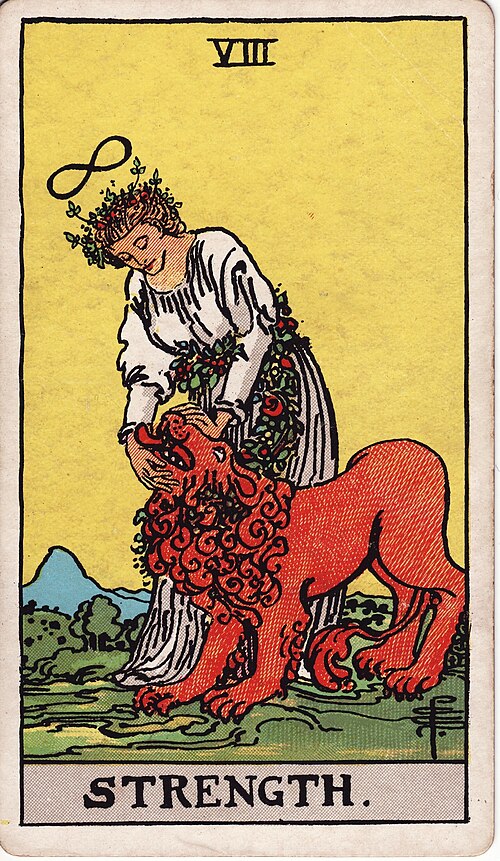
Strength Rider-Waite-Smith tarot card
09Major Arcana

Strength

Upright
Strength points to quiet power, emotional steadiness, and the patient use of influence. Its strength can be physical, but the RWS image gives more weight to self-command and a humane relationship with instinct.
Reversed
Strength does not automatically mean weakness or a negative result. It may show that the card’s energy is blocked, turned inward, exaggerated, delayed, or asking to change direction.
Read the complete card guide →
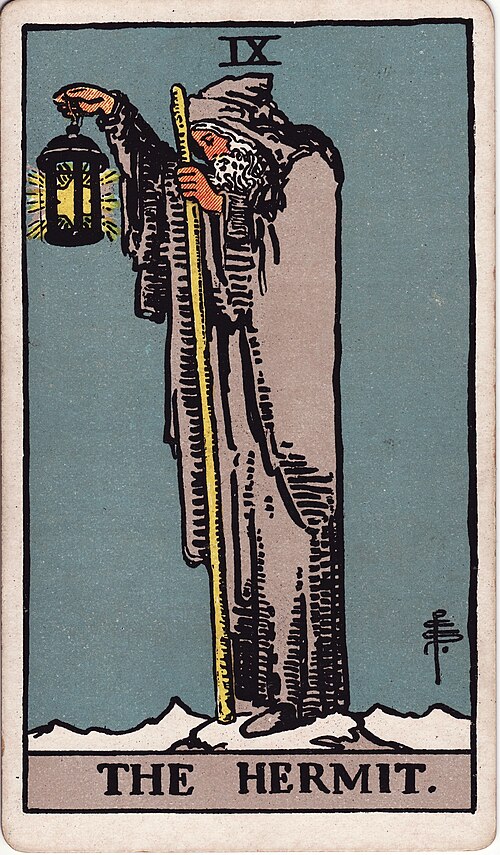
The Hermit Rider-Waite-Smith tarot card
10Major Arcana

The Hermit

Upright
The Hermit favors a purposeful pause, careful research, and a quieter method of finding direction. It can indicate time alone to separate a personal value from social pressure, or a mentor who offers a method rather than a command.
Reversed
The Hermit is not automatically negative. It may show the lantern turned inward, a needed retreat that has lasted too long, or guidance that is difficult to access.
Read the complete card guide →
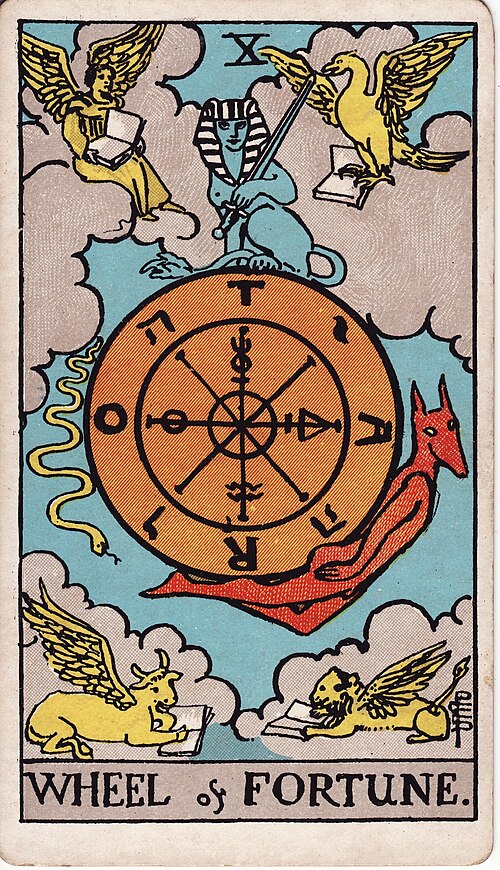
Wheel Of Fortune Rider-Waite-Smith tarot card
11Major Arcana

Wheel Of Fortune

Upright
the card can describe a change in conditions, a recurring pattern becoming visible, or a moment when timing matters. Its strength is flexibility: a person may recognize an opening, learn from a previous turn, or stop treating a temporary high or low as permanent.
Reversed
the Wheel of Fortune may point to blockage: a cycle feels stuck, a familiar pattern keeps returning, or an external change is being resisted. It can describe internalization too, when the visible change is less important than a private belief about luck, control, or…
Read the complete card guide →
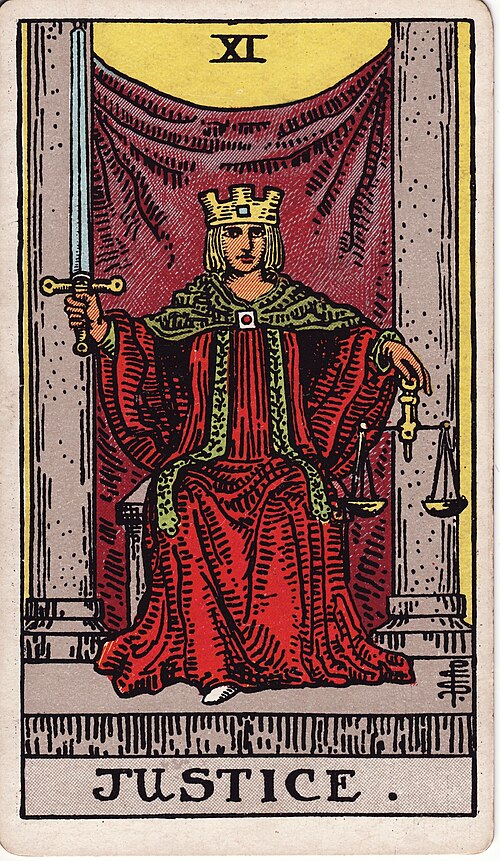
Justice Rider-Waite-Smith tarot card
12Major Arcana

Justice

Upright
Justice can indicate a decision that benefits from clear standards, honest evidence, and proportionate consequences. Its strengths include impartial review, keeping agreements, naming responsibility, correcting an imbalance, and making a choice that remains defensible after…
Reversed
Justice may show blockage around accountability: facts are obscured, standards are applied unevenly, or a decision is being postponed because its consequences are uncomfortable. The theme may be internalized when self-criticism, guilt, or fear of being judged overwhelms a…
Read the complete card guide →
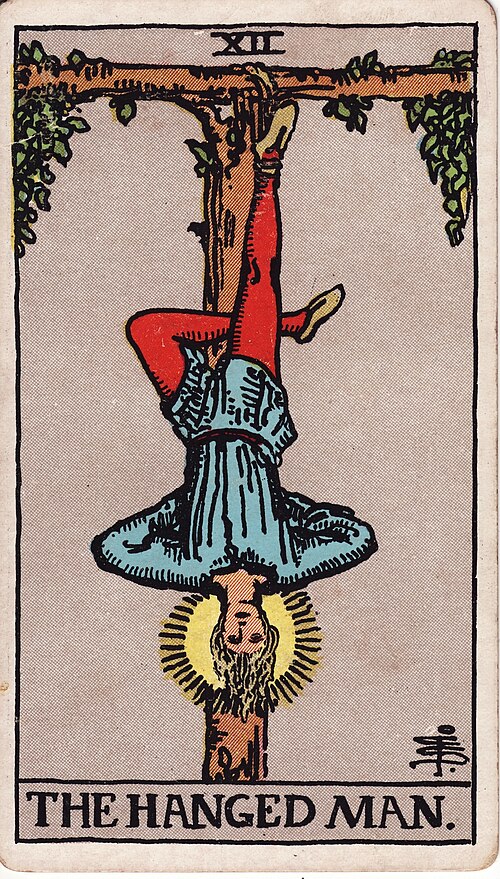
The Hanged Man Rider-Waite-Smith tarot card
13Major Arcana

The Hanged Man

Upright
The Hanged Man often describes a period in which pushing harder is less useful than observing differently. Its strength is the ability to tolerate uncertainty long enough to notice a hidden assumption.
Reversed
does not automatically mean bad news. It can show blockage when a person cannot move because an old interpretation, fear, or obligation is holding the situation in place.
Read the complete card guide →
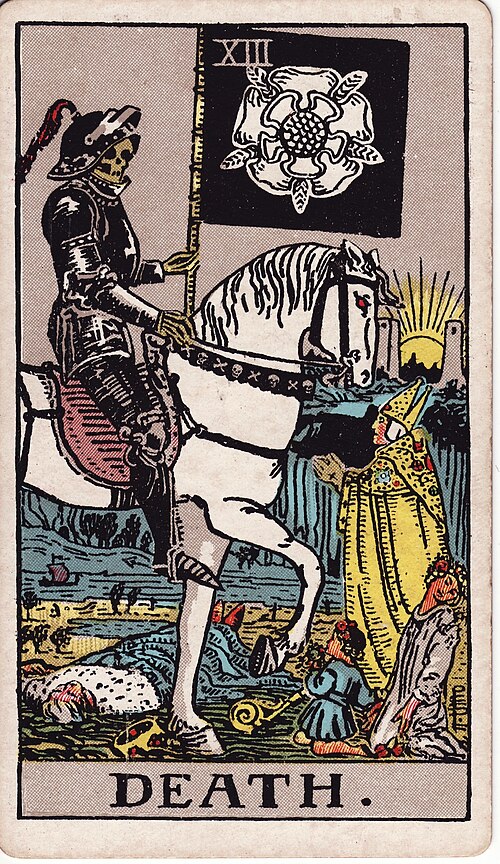
Death Rider-Waite-Smith tarot card
14Major Arcana

Death

Upright
Death often marks a substantial transition: a role ends, a habit is retired, a relationship changes its terms, or an old story loses authority. Its strength is honesty.
Reversed
does not automatically mean a bad event. It can show blockage when fear, attachment, or unfinished grief prevents a needed transition.
Read the complete card guide →
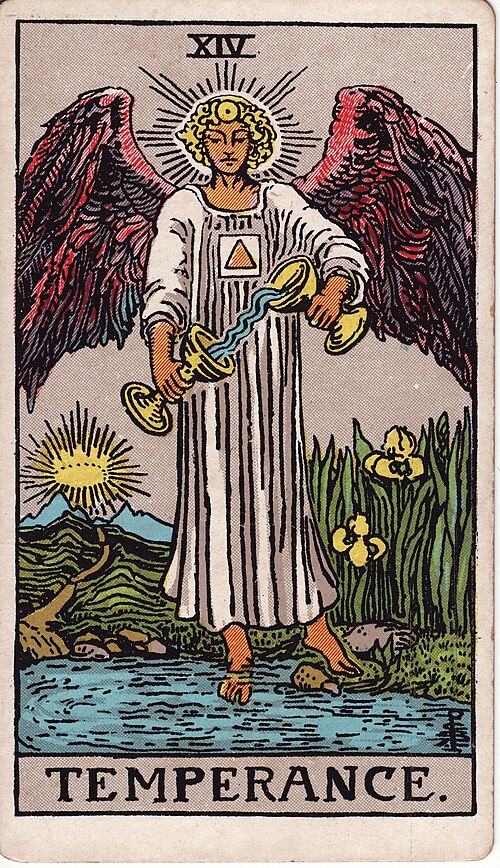
Temperance Rider-Waite-Smith tarot card
15Major Arcana

Temperance

Upright
Temperance describes a middle process: combine what can cooperate, separate what cannot, and test the mixture in real conditions. Its strength is not passivity but regulated movement.
Reversed
Temperance does not automatically mean failure or danger. It may show that the theme is blocked, internalized, delayed, exaggerated, or asking for a change of direction.
Read the complete card guide →
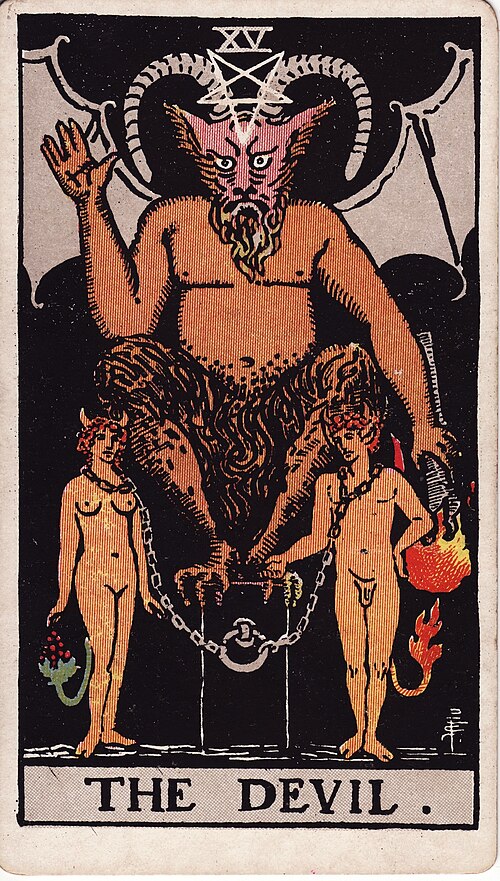
The Devil Rider-Waite-Smith tarot card
16Major Arcana

The Devil

Upright
The Devil brings attention to a force that is persuasive, rewarding, and costly. It may show a habit, contract, status system, relationship dynamic, fear, or coping strategy that has become central.
Reversed
The Devil does not automatically mean liberation, and it is not automatically negative. It can describe a loosening chain, an internal confrontation with shame, a hidden dependency becoming visible, or a delayed decision to change.
Read the complete card guide →
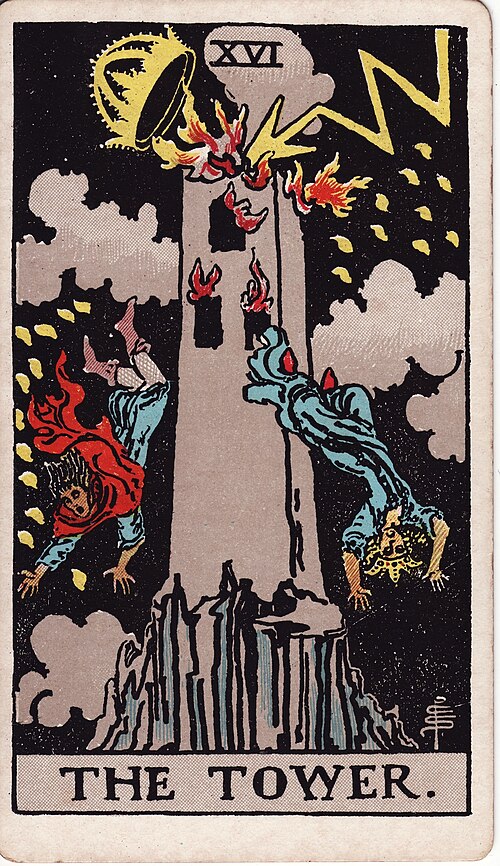
The Tower Rider-Waite-Smith tarot card
17Major Arcana

The Tower

Upright
The Tower can describe a sharp change that interrupts a settled plan, exposes a contradiction, or makes an old arrangement impossible to maintain. Its strength is clarity under pressure.
Reversed
The Tower does not automatically mean that disaster is avoided or that the card is negative. It may show blockage when someone refuses to acknowledge a failing structure, internalization when the upheaval is being processed privately, excess when fear turns a manageable…
Read the complete card guide →
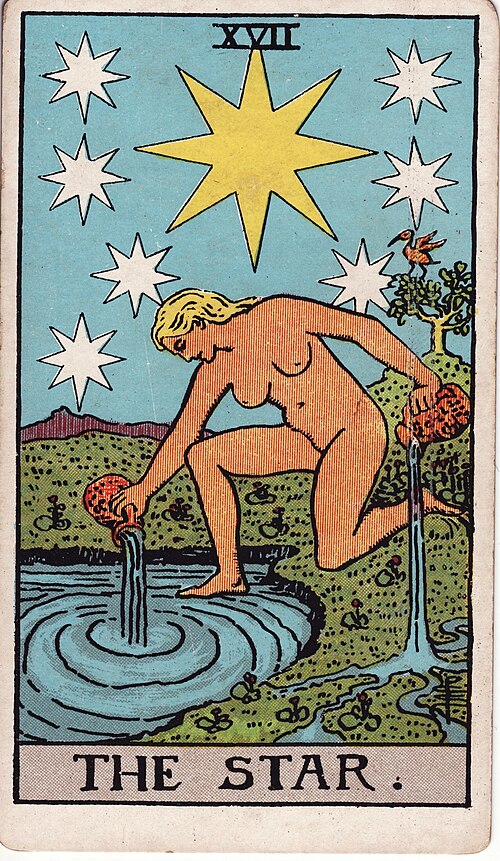
The Star Rider-Waite-Smith tarot card
18Major Arcana

The Star

Upright
The Star can describe renewed trust in a process, a return of creative or emotional capacity, and the ability to act from a clear ideal without pretending that all problems are solved. Its strength is sustainable openness.
Reversed
The Star is not automatically a bad omen. It may show blockage when discouragement prevents a person from recognizing available support, internalization when hope is private and not yet ready to be shared, excess when idealism becomes escapism or over-giving, delay when…
Read the complete card guide →
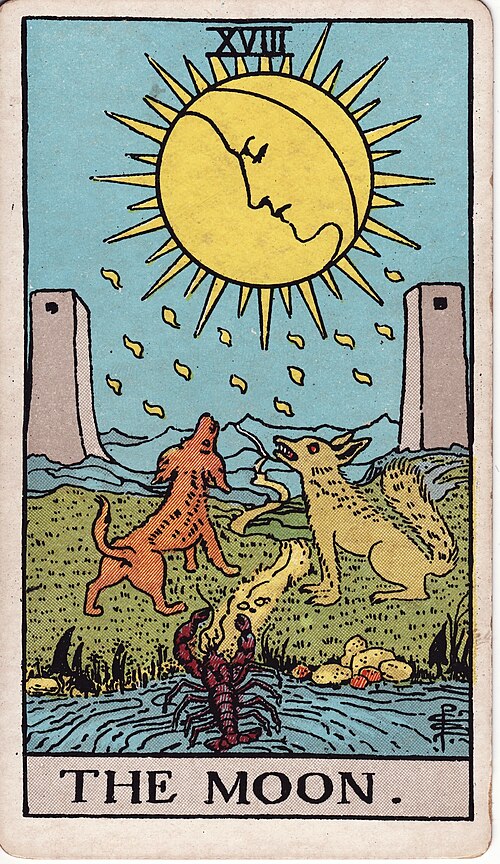
The Moon Rider-Waite-Smith tarot card
19Major Arcana

The Moon

Upright
The Moon describes a situation in which direct clarity is limited and emotional or unconscious material is influential. Its strength is sensitivity: you may detect a pattern, creative possibility, or uncomfortable feeling before you can explain it.
Reversed
The Moon can show the same theme turned inward, delayed, intensified, or beginning to resolve. A blockage may appear as avoidance of an obvious question, distrust of every source, or inability to distinguish fear from data.
Read the complete card guide →
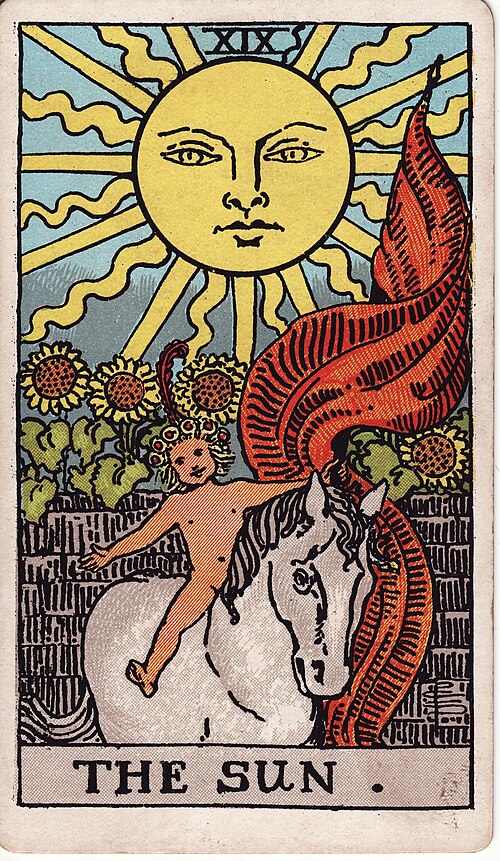
The Sun Rider-Waite-Smith tarot card
20Major Arcana

The Sun

Upright
The Sun points to illumination, warmth, successful communication, and a stronger connection between what you value and what you do. Its potential strength is directness: say the important thing plainly, show the work, accept useful recognition, or let a good result be real…
Reversed
The Sun may describe clarity that is partial, delayed, blocked, or turned inward. A blockage can appear as shame, self-doubt, burnout, fear of being seen, or a practical success that is not yet acknowledged.
Read the complete card guide →
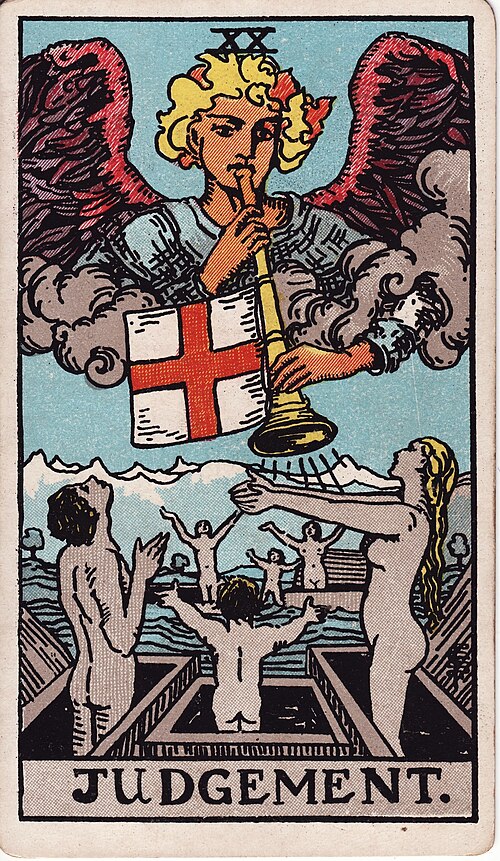
Judgement Rider-Waite-Smith tarot card
21Major Arcana

Judgement

Upright
Judgement often describes a moment when evidence, memory, or consequence becomes difficult to ignore. Its strength is honest review: naming what worked, acknowledging harm or learning, and recognizing a direction that fits the person you are now.
Reversed
Judgement does not automatically mean failure or punishment. It may show blockage when a person avoids an honest review, internalization when the call is felt privately but not yet expressed, excess when guilt or criticism becomes overwhelming, delay when a decision is…
Read the complete card guide →
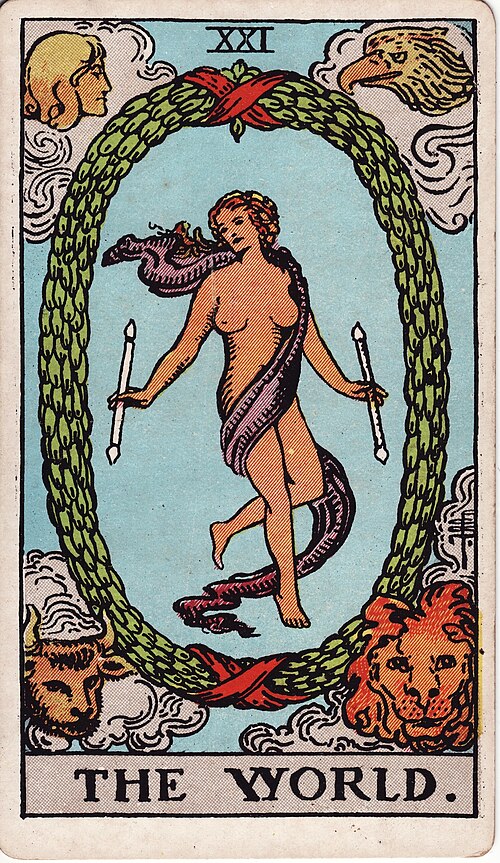
The World Rider-Waite-Smith tarot card
22Major Arcana

The World

Upright
The World often suggests that separate strands are ready to be understood as one process. Its strength is integration: completing a course, publishing finished work, accepting a new role, or recognizing how earlier lessons now cooperate.
Reversed
The World does not automatically mean a bad ending. It can indicate blockage when a final piece is missing, internalization when the achievement has not yet been emotionally absorbed, excess when completion standards become impossible, delay when a handoff or closure is…
Read the complete card guide →
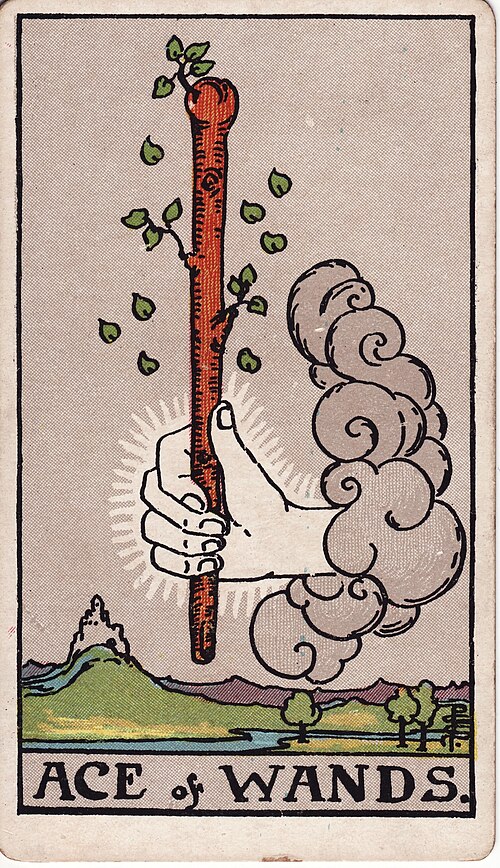
Ace of Wands Rider-Waite-Smith tarot card
23Minor Arcana

Ace of Wands

Upright
the Ace of Wands can describe a clear beginning: an idea that has enough heat to deserve a first experiment, a desire that identifies a direction, or a chance to act with more vitality. Its strength is immediacy.
Reversed
the Ace of Wands does not automatically mean failure or bad news. It may show blockage: the idea is present but cannot yet reach action.
Read the complete card guide →
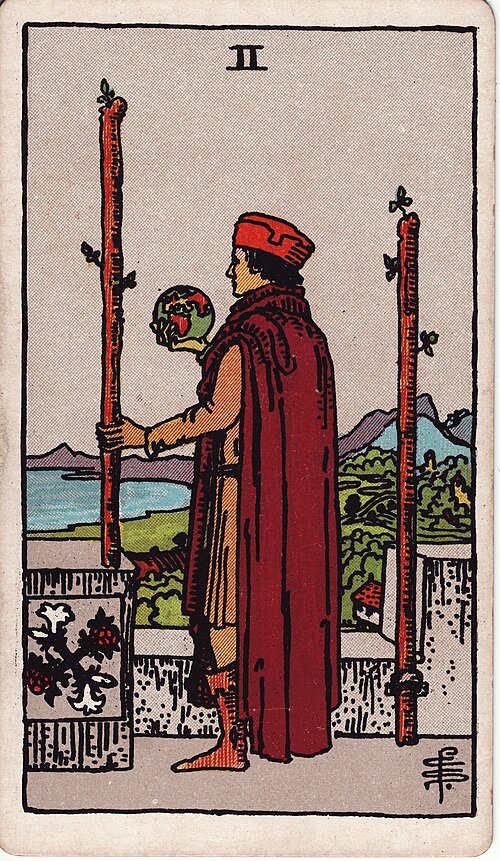
Two of Wands Rider-Waite-Smith tarot card
24Minor Arcana

Two of Wands

Upright
the Two of Wands often describes a pause that is purposeful rather than passive. The initial idea exists, and now the reader must compare routes, resources, timing, and consequences.
Reversed
the Two of Wands does not automatically mean a bad outcome. It may show blockage through a narrow horizon, fear of leaving a familiar position, missing information, or dependence on someone else’s permission.
Read the complete card guide →
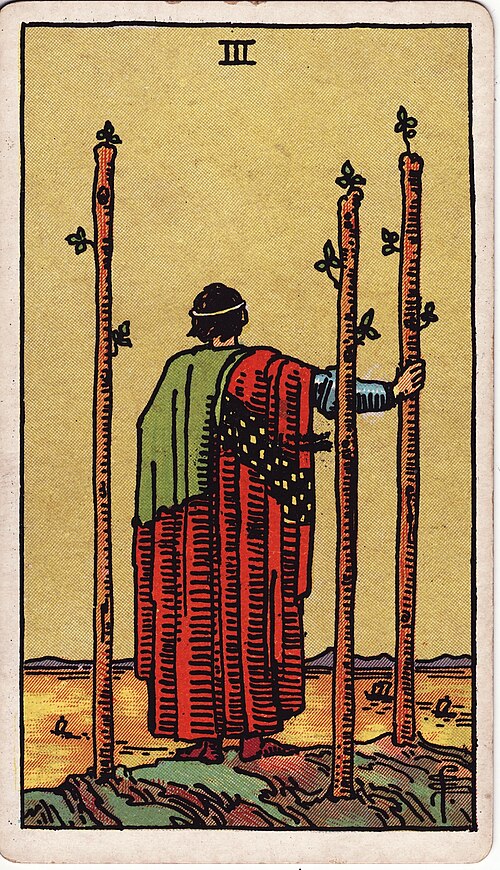
Three of Wands Rider-Waite-Smith tarot card
25Minor Arcana

Three of Wands

Upright
the card describes a plan entering its outward phase. You may have chosen a direction, built a first version, or committed resources; now the useful work is tracking what happens beyond your immediate reach.
Reversed
A reversed card does not automatically mean failure. It can show the Three of Wands theme turned inward, slowed down, or needing a change of direction.
Read the complete card guide →
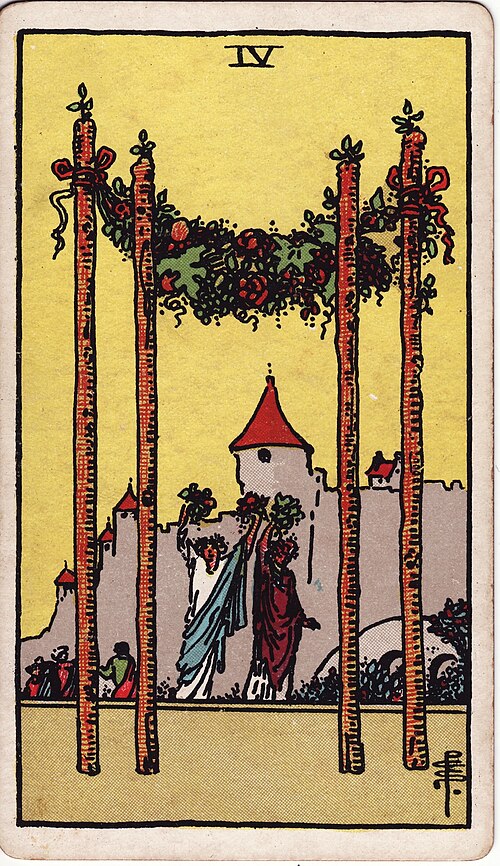
Four of Wands Rider-Waite-Smith tarot card
26Minor Arcana

Four of Wands

Upright
the Four of Wands describes a pause that confirms progress. The card may mark a completed phase, a supportive gathering, a homecoming, or an agreement that makes further work possible.
Reversed
does not automatically mean that joy is false or that a relationship, home, or project must end. It can show a celebration turned private, a foundation under pressure, or a threshold that has not yet been crossed.
Read the complete card guide →
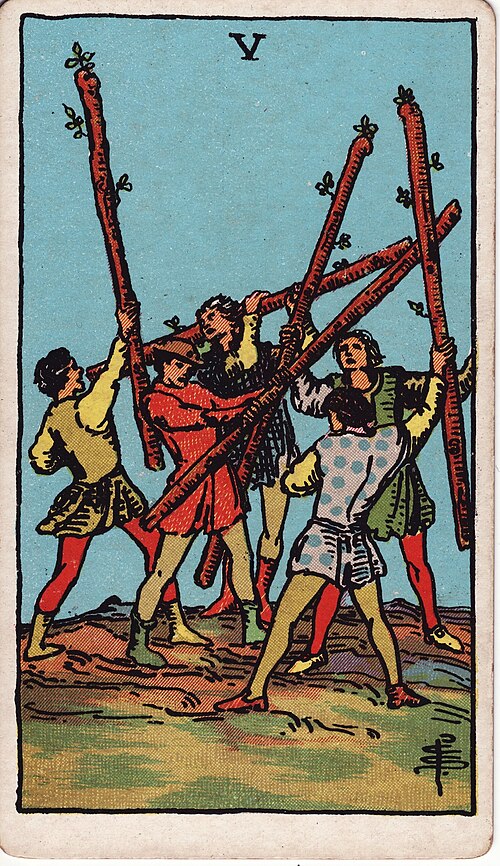
Five of Wands Rider-Waite-Smith tarot card
27Minor Arcana

Five of Wands

Upright
the Five of Wands often describes a live situation in which energy is available but alignment is incomplete. Its strengths are courage to participate, willingness to test an idea, resilience under challenge, and the stimulation that comes from hearing alternatives.
Reversed
does not automatically mean a bad result. It may show the Five of Wands turned inward or operating out of sequence.
Read the complete card guide →
Six of Wands Rider-Waite-Smith tarot card
28Minor Arcana

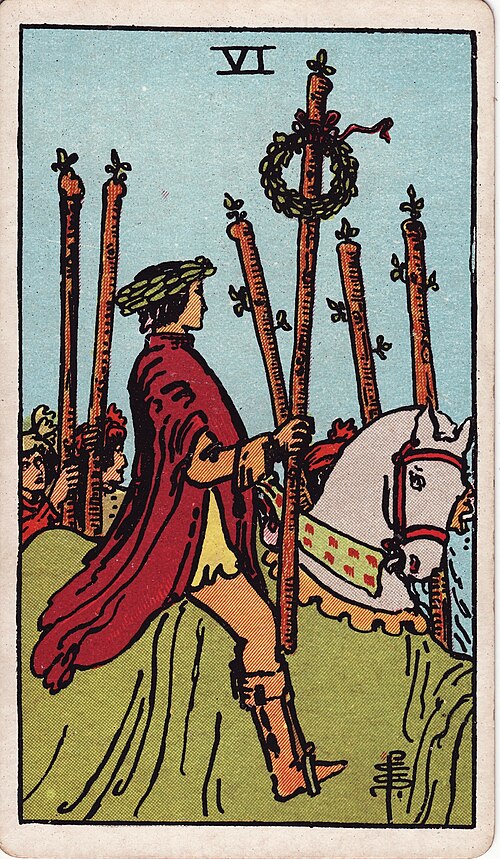
Six of Wands

Upright
the Six of Wands suggests that effort has become legible to other people or that a result is ready to be shared. Its strengths are morale, clear communication, the ability to represent a group, and the confidence to keep moving after a challenge.
Reversed
does not automatically cancel progress or turn the card into failure. It can show recognition that is delayed, private, uneven, or difficult to trust.
Read the complete card guide →
Seven of Wands Rider-Waite-Smith tarot card
29Minor Arcana

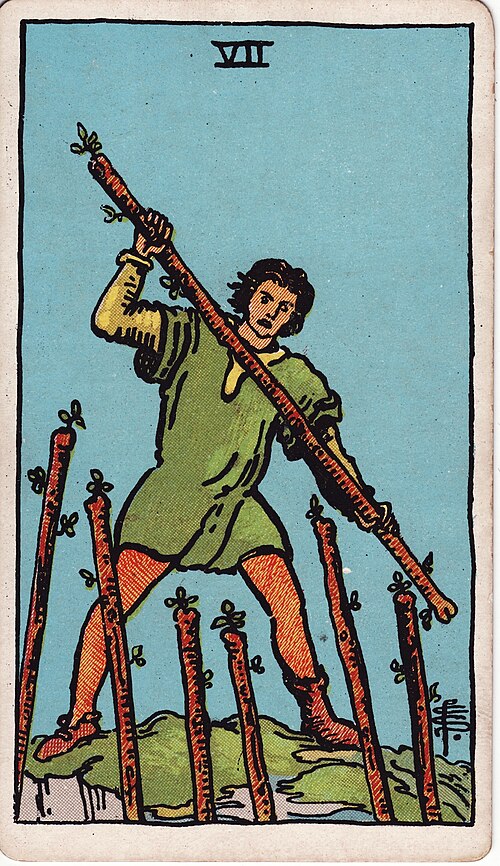
Seven of Wands

Upright
the Seven of Wands suggests a need to maintain a position, defend a principle, or continue a demanding effort after earlier progress. Its strengths include healthy assertiveness, resilience, the ability to name limits, and willingness to protect work that matters.
Reversed
does not automatically mean defeat or weakness. Blockage may appear as poor footing, unclear authority, a boundary that was never stated, or too many demands arriving at once.
Read the complete card guide →
Eight of Wands Rider-Waite-Smith tarot card
30Minor Arcana

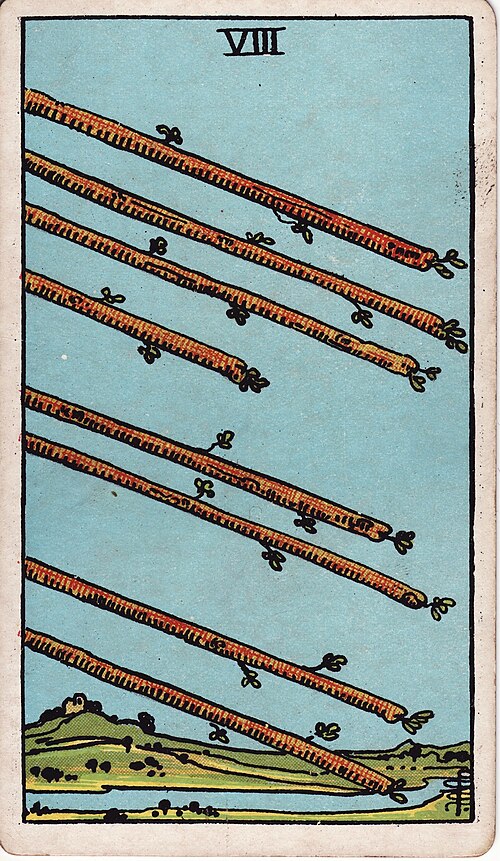
Eight of Wands

Upright
the Eight of Wands suggests that a process is ready to move, a message can travel, or several actions may converge quickly. Its strengths are responsiveness, clean handoffs, reduced delay, enthusiasm, and the ability to act while a window is open.
Reversed
does not simply mean that nothing will happen. Blockage may show crossed signals, missing infrastructure, a route that is not open, or too many moving parts competing for the same channel.
Read the complete card guide →
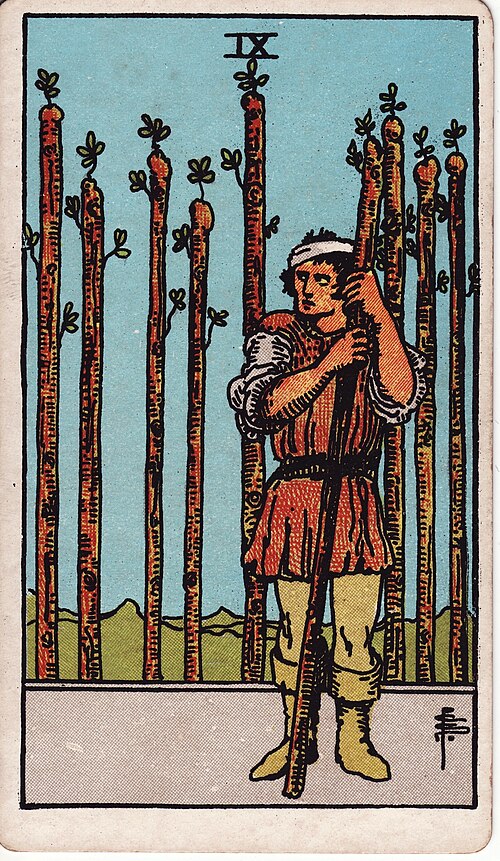
Nine of Wands Rider-Waite-Smith tarot card
31Minor Arcana

Nine of Wands

Upright
the Nine of Wands describes a person or process that has already used significant energy and still has a final stretch to manage. Its strength is durable commitment: experience has taught you what to watch, where your limits are, and which protections are useful.
Reversed
the card may show blockage when fatigue, fear, or an unclear boundary prevents a useful next move. It may point to internalization: the person keeps all strain private and refuses support even when help is available.
Read the complete card guide →
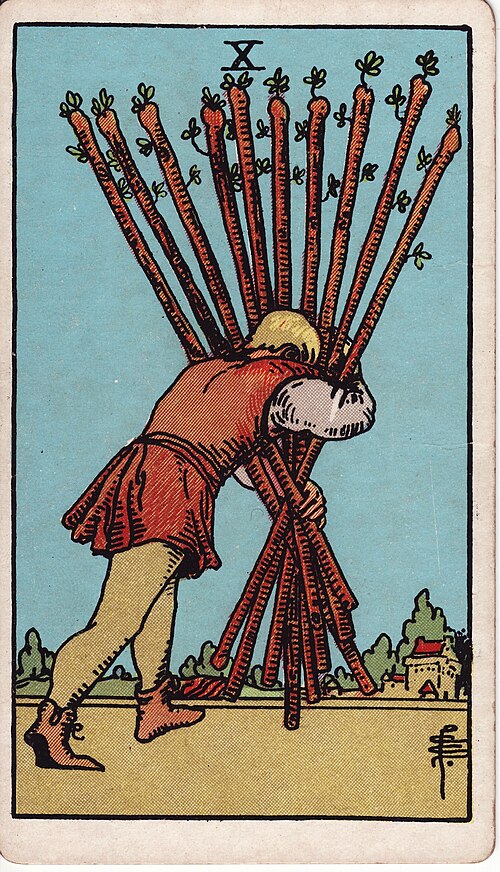
Ten of Wands Rider-Waite-Smith tarot card
32Minor Arcana

Ten of Wands

Upright
the Ten of Wands can describe sustained effort, a demanding responsibility, or the final phase of a project that has become heavier than expected. Its strength is follow-through: the traveler has organized enough energy to move a large load toward a destination.
Reversed
the Ten of Wands may show blockage when too many tasks prevent prioritization or when shame makes a person refuse help. Internalization can appear as carrying pressure privately, hiding difficulty, or defining worth by output.
Read the complete card guide →
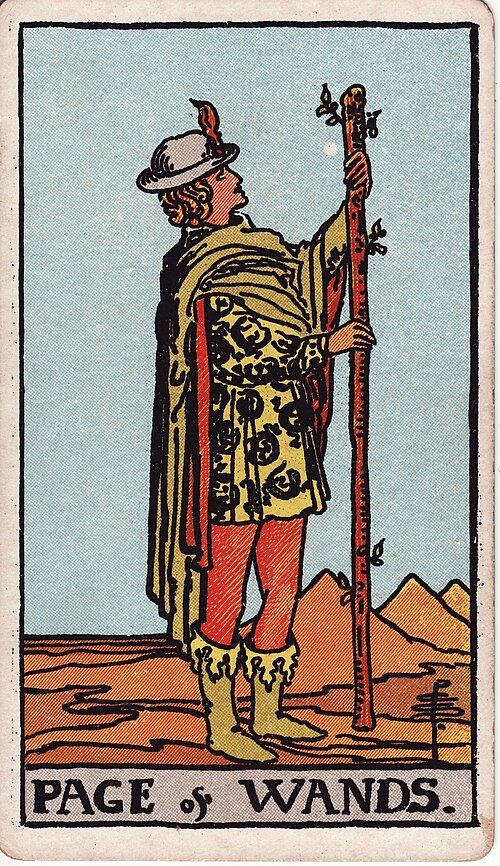
Page of Wands Rider-Waite-Smith tarot card
33Minor Arcana

Page of Wands

Upright
the Page of Wands describes a lively beginning. A new idea may deserve a trial, a conversation may open a door, or a person may feel ready to study a subject with genuine interest.
Reversed
the Page of Wands can show blockage around a new beginning, internalization of an idea that has not yet been expressed, excess enthusiasm without a workable plan, delay in sending or receiving a message, or a need for direction adjustment. It may describe a learner who fears…
Read the complete card guide →
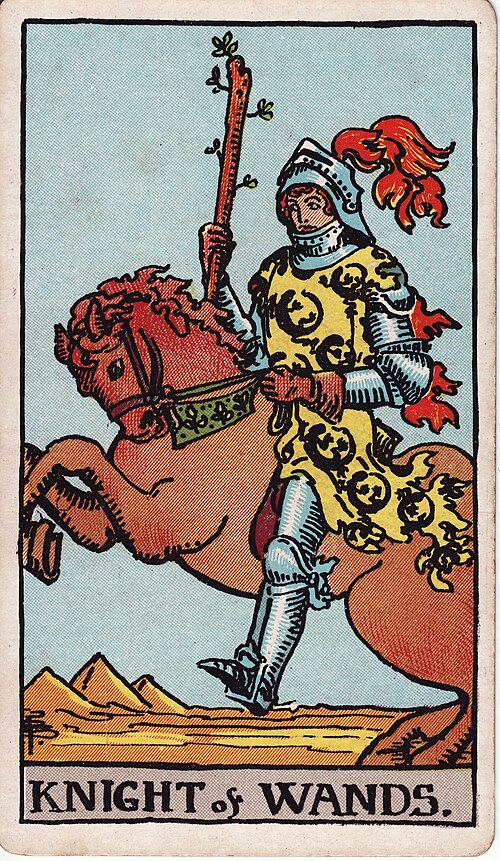
Knight of Wands Rider-Waite-Smith tarot card
34Minor Arcana

Knight of Wands

Upright
the Knight of Wands is a strong signal for deliberate action, a bold proposal, a campaign, a trip, a performance, or a period in which waiting has become less useful than testing the route. Its strength is mobilization.
Reversed
the Knight of Wands can describe blockage in momentum, internalization of anger or ambition, excess speed, delay caused by poor preparation, or a direction that needs adjustment before further action. Sometimes it shows a rider who keeps launching without finishing;…
Read the complete card guide →
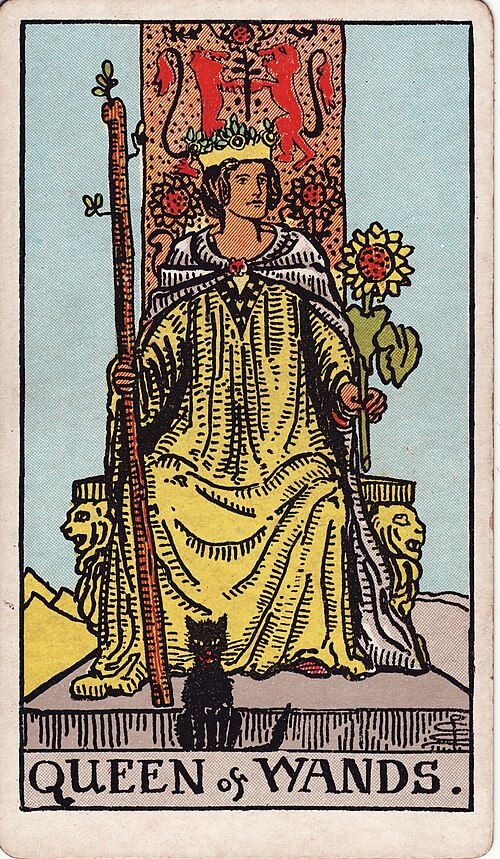
Queen of Wands Rider-Waite-Smith tarot card
35Minor Arcana

Queen of Wands

Upright
the Queen of Wands describes confident participation, creative leadership, and a visible willingness to support life as it is actually being lived. She may point to a person who encourages others without shrinking herself, or to a way of acting that combines enthusiasm with…
Reversed
the Queen of Wands can show blockage around self-expression, an idea or feeling kept private, excess charisma used defensively, delay caused by depleted confidence, or a need to adjust direction before taking center stage. It may describe burnout behind a polished…
Read the complete card guide →
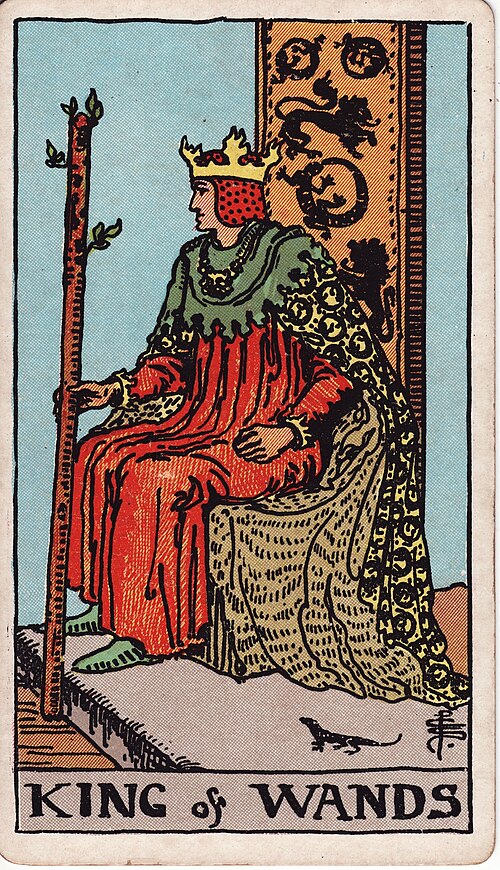
King of Wands Rider-Waite-Smith tarot card
36Minor Arcana

King of Wands

Upright
the King of Wands describes purposeful leadership, an ambitious but coherent plan, and the ability to give creative energy a public direction. He can represent a founder, mentor, team lead, organizer, or the part of the querent that is ready to make a decision and take…
Reversed
the King of Wands can show blockage around leadership, ambition turned inward, excess control or volatility, delay caused by an unrealistic plan, or a direction that needs adjustment before more people are recruited. It may describe someone who keeps refining a vision…
Read the complete card guide →
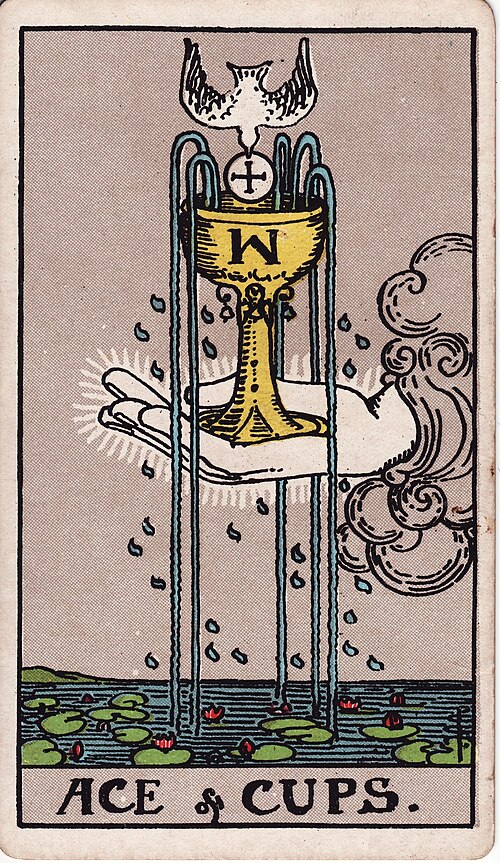
Ace of Cups Rider-Waite-Smith tarot card
37Minor Arcana

Ace of Cups

Upright
the Ace of Cups can describe a feeling becoming available for honest attention: affection, relief, creative inspiration, grief that can finally move, or a renewed capacity to care. Its strength is openness.
Reversed
the Ace of Cups does not automatically mean emotional failure or bad news. It may show blockage: affection, grief, imagination, or support cannot yet move into expression.
Read the complete card guide →
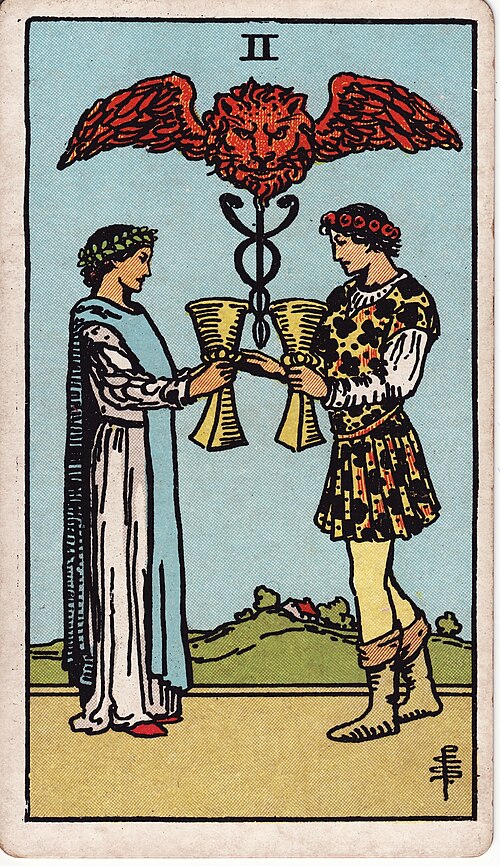
Two of Cups Rider-Waite-Smith tarot card
38Minor Arcana

Two of Cups

Upright
the Two of Cups can describe a relationship in which attention, feeling, or effort is being exchanged. It may apply to romance, friendship, collaboration, reconciliation, mentorship, or a conversation where both sides can speak and listen.
Reversed
the Two of Cups does not automatically mean a breakup or hostile outcome. It may show blockage in communication, unequal effort, an agreement that cannot yet be made, or feelings that are not being expressed safely.
Read the complete card guide →
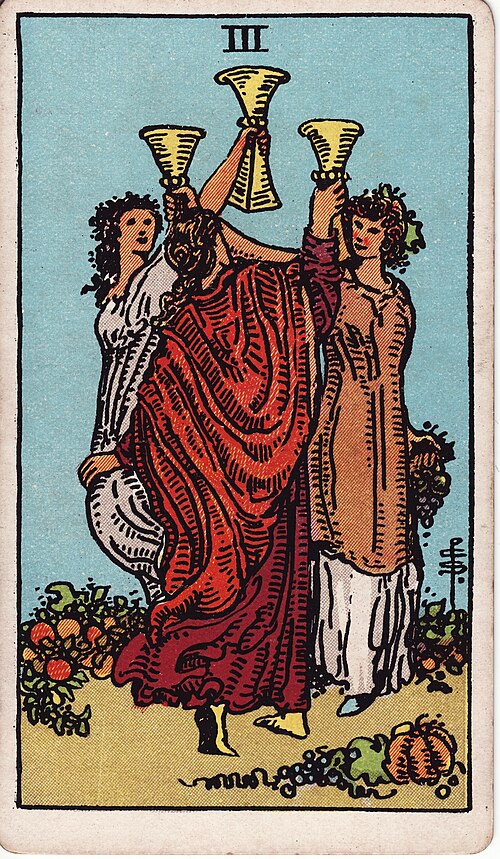
Three of Cups Rider-Waite-Smith tarot card
39Minor Arcana

Three of Cups

Upright
the Three of Cups can describe a supportive circle, a reunion, a shared milestone, collaborative creativity, or a moment when feelings become easier to express with trusted people present. Its central strength is mutual nourishment.
Reversed
the Three of Cups does not automatically mean betrayal, a breakup, or a bad social outcome. It may show blockage in belonging, difficulty finding supportive people, or a group process that cannot yet coordinate.
Read the complete card guide →
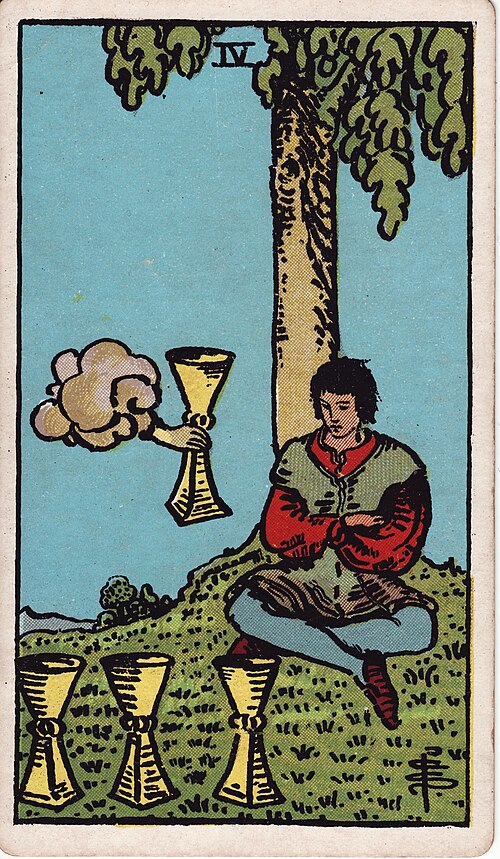
Four of Cups Rider-Waite-Smith tarot card
40Minor Arcana

Four of Cups

Upright
the Four of Cups can describe a period when available options no longer feel meaningful, when attention needs to turn inward, or when a person is evaluating whether an offer matches their actual values. Its strength is discernment: the card does not require saying yes to…
Reversed
the Four of Cups does not automatically mean sudden happiness or a negative reversal. It may show blockage in recognizing desire, difficulty responding to an offer, or a pattern of disengagement that has become hard to interrupt.
Read the complete card guide →
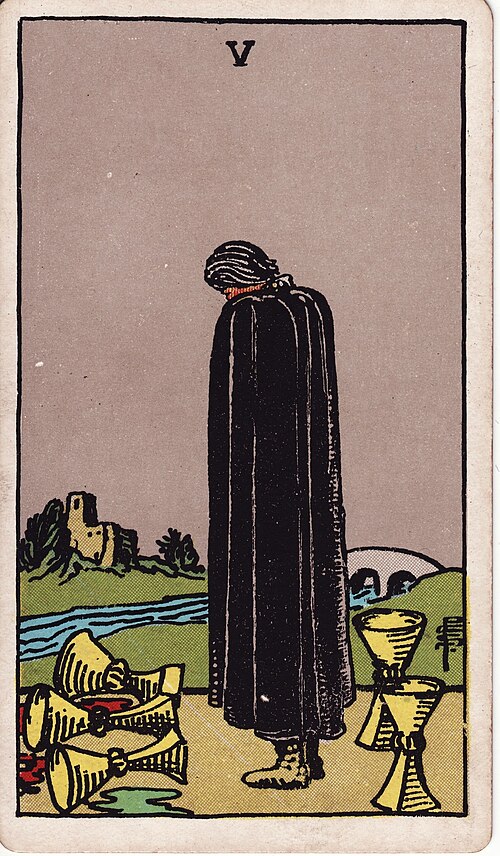
Five of Cups Rider-Waite-Smith tarot card
41Minor Arcana

Five of Cups

Upright
the Five of Cups can describe a real disappointment, an ending that needs to be acknowledged, or a period when attention is understandably drawn to what cannot be restored in its old form. Its strength is honest recognition.
Reversed
the Five of Cups does not automatically mean recovery, nor does it turn the upright card into a simple negative. It may show blockage in grieving, difficulty admitting disappointment, or an inability to see what remains because the feeling has become internalized.
Read the complete card guide →
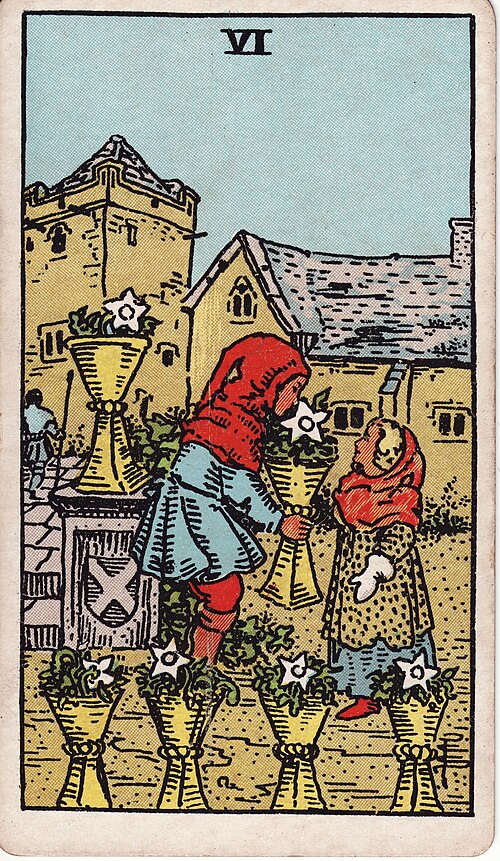
Six of Cups Rider-Waite-Smith tarot card
42Minor Arcana

Six of Cups

Upright
the Six of Cups can describe a return to a familiar place, an old connection, a generous exchange, a memory that supplies context, or a simple pleasure that restores emotional proportion. Its strength is the ability to receive and give care without making every interaction a…
Reversed
the Six of Cups does not automatically mean that the past is bad or that a reunion will fail. It may show blockage in accessing comfort, difficulty trusting a kind exchange, or a memory that remains internalized and hard to discuss.
Read the complete card guide →
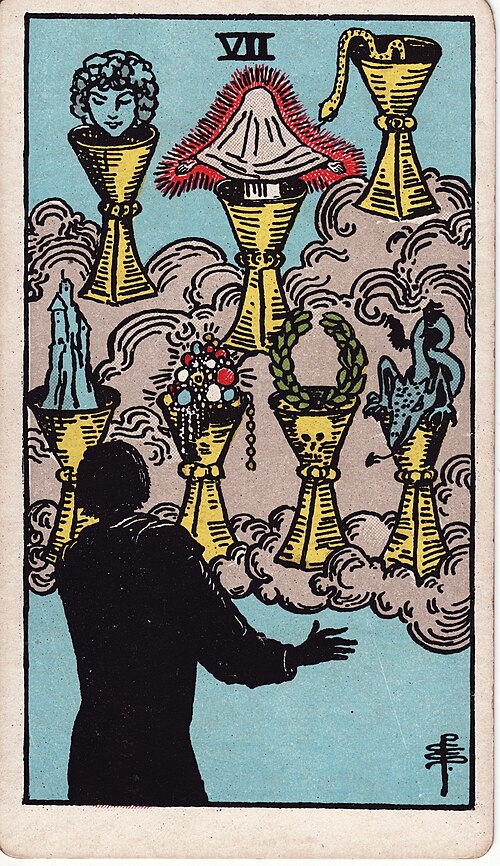
Seven of Cups Rider-Waite-Smith tarot card
43Minor Arcana

Seven of Cups

Upright
this card often describes a wide field of wishes, images, invitations, or possible futures. Its strength is generative attention: brainstorming, imagining a different life, noticing several emotional truths, or allowing an emerging idea to become visible.
Reversed
the same theme may be blocked, internalized, excessive, delayed, or redirected. A blockage can feel like blankness, inability to imagine a path, or distrust of every desire.
Read the complete card guide →
Eight of Cups Rider-Waite-Smith tarot card
44Minor Arcana

Eight of Cups

Upright
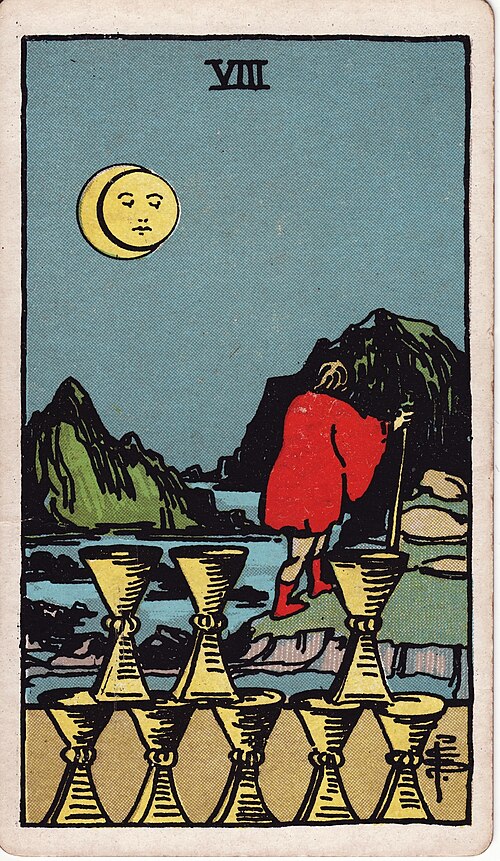
the Eight of Cups often marks a deliberate decision to step away from an emotional pattern, role, goal, or arrangement that has become insufficient. Its strength is honest disengagement.
Reversed
the card’s departure theme may appear as blockage, internalization, excess, delay, or direction adjustment. Blockage can mean feeling unable to leave because of money, duty, fear, or an unresolved attachment.
Read the complete card guide →
Nine of Cups Rider-Waite-Smith tarot card
45Minor Arcana

Nine of Cups

Upright
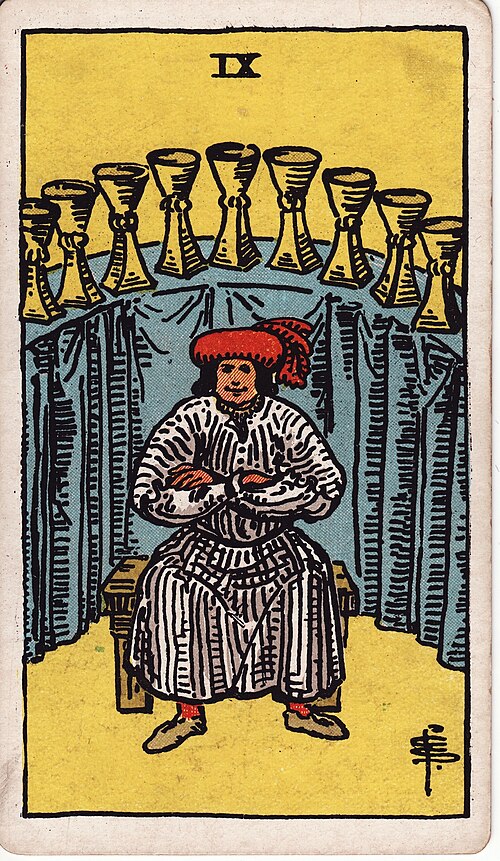
the Nine of Cups highlights a moment when a desire, need, or emotional aim has reached a satisfying checkpoint. Its strength is not endless acquisition but the ability to recognize a result and let it register.
Reversed
the card can describe blockage when the questioner cannot acknowledge a real gain, or internalization when satisfaction is kept private and becomes hard to communicate. It may show excess through overconsumption, approval-seeking, fantasy, or using pleasure to avoid a…
Read the complete card guide →
Ten of Cups Rider-Waite-Smith tarot card
46Minor Arcana

Ten of Cups

Upright
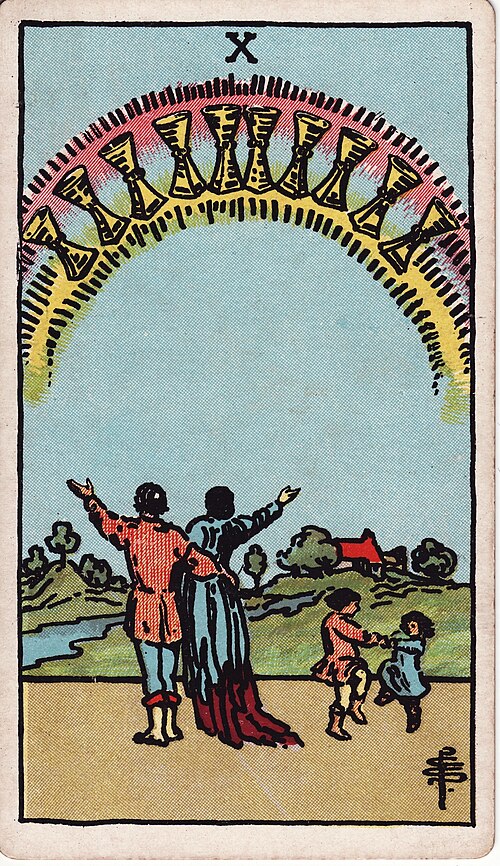
the Ten of Cups emphasizes a shared emotional field: people, values, and routines that allow connection to be experienced over time. Its strength is mutual recognition rather than solitary achievement.
Reversed
the Ten of Cups can show blockage around belonging, difficulty expressing a shared vision, or a household pattern in which people live close together but feel emotionally separate. Internalization may appear as private grief, an unspoken standard of happiness, or a need to…
Read the complete card guide →
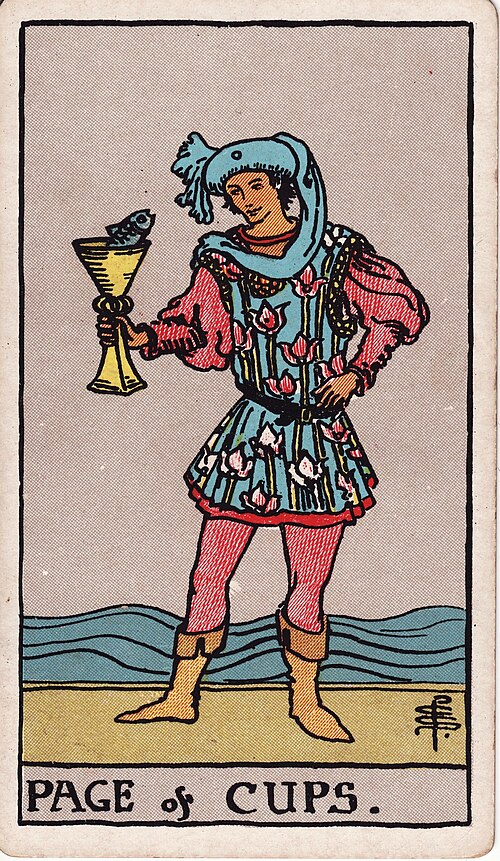
Page of Cups Rider-Waite-Smith tarot card
47Minor Arcana

Page of Cups

Upright
the Page of Cups often describes an emotional opening, a gentle invitation, creative play, a sincere but developing feeling, or news that changes the tone of a situation. Its strength is not certainty; it is the willingness to notice and learn.
Reversed
the Page of Cups can show a blocked emotional message, a feeling kept private, or an inner response that has not found safe language. It may indicate excess sensitivity, fantasy used to avoid a fact, an immature apology, or a delay in expressing care.
Read the complete card guide →
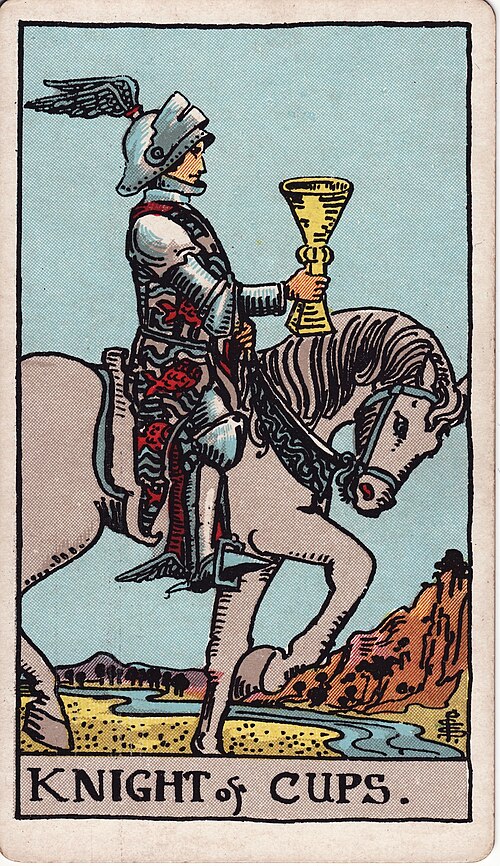
Knight of Cups Rider-Waite-Smith tarot card
48Minor Arcana

Knight of Cups

Upright
the Knight of Cups describes a feeling that is ready to move: a proposal, a thoughtful message, an artistic presentation, a diplomatic approach, or a journey shaped by values. Its strength is the ability to make emotion communicable without treating it as weakness.
Reversed
the Knight of Cups can indicate blocked movement, a feeling that remains internal, emotional excess, delay, or a change of direction. The blockage may be fear of rejection or difficulty turning inspiration into a concrete offer.
Read the complete card guide →
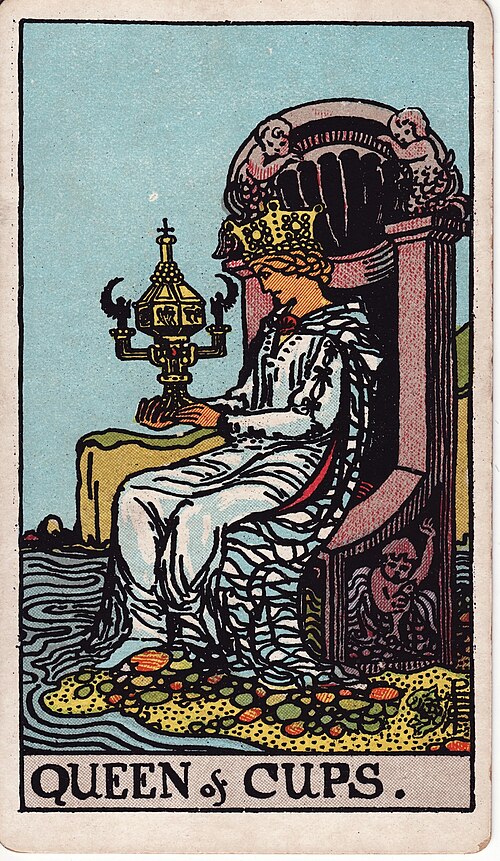
Queen of Cups Rider-Waite-Smith tarot card
49Minor Arcana

Queen of Cups

Upright
the Queen of Cups points to feeling that is deep, attentive, and capable of response. The core dynamic is not simply being sensitive; it is receiving information from emotion and deciding how to care for it.
Reversed
does not automatically mean that compassion is bad or that an emotional outcome is doomed. It changes the direction, availability, or proportion of the Queen's qualities.
Read the complete card guide →
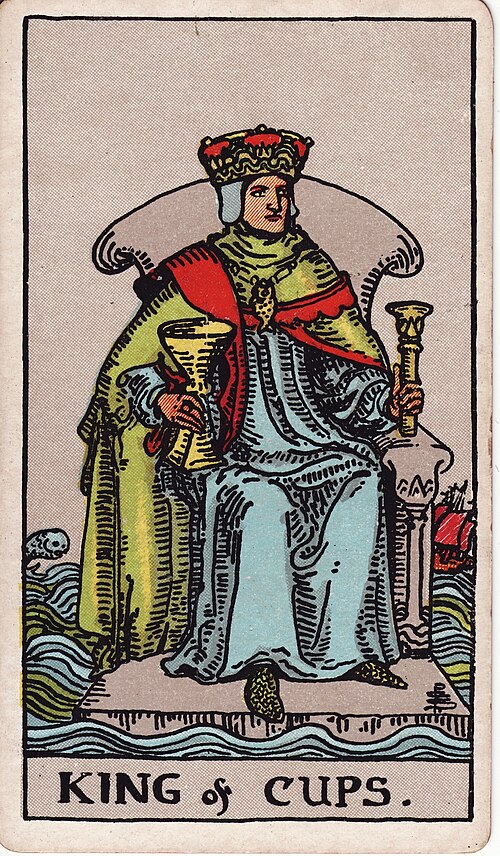
King of Cups Rider-Waite-Smith tarot card
50Minor Arcana

King of Cups

Upright
the King of Cups describes the ability to feel fully while choosing a measured response. His core dynamic is not emotional absence but integration: the sea remains active, yet the King does not let every wave dictate his conduct.
Reversed
A reversed King is not automatically cruel, weak, or doomed. Reversal can show a quality turned inward, blocked, delayed, exaggerated, or needing a different direction.
Read the complete card guide →
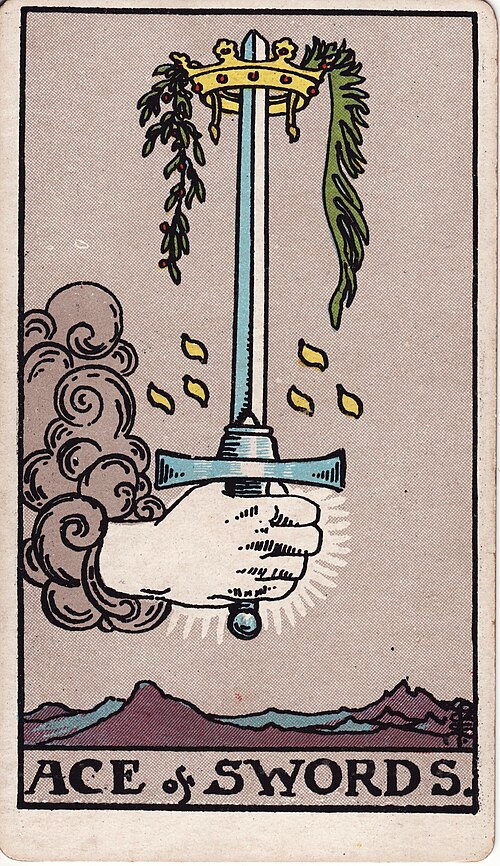
Ace of Swords Rider-Waite-Smith tarot card
51Minor Arcana

Ace of Swords

Upright
the Ace of Swords can describe a fresh insight, a direct conversation, a useful standard, a clean distinction, or a decision that removes avoidable confusion. Its strength is not simply being forceful.
Reversed
does not automatically mean failure or bad news. It can show a blockage in forming a conclusion, a thought that remains private, an insight that is difficult to express, or a decision delayed until more information arrives.
Read the complete card guide →
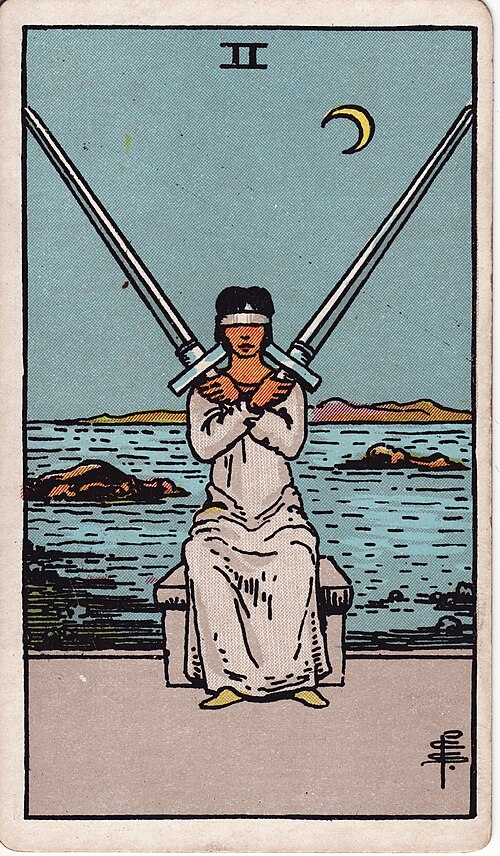
Two of Swords Rider-Waite-Smith tarot card
52Minor Arcana

Two of Swords

Upright
the Two of Swords can show a conscious pause, a boundary around overwhelming input, a fair attempt to hear both sides, or a decision that needs one more relevant fact. Its strength is restraint: the person does not rush simply to end discomfort.
Reversed
does not automatically mean a negative outcome. It may indicate that a blockage is loosening, that a choice can no longer be postponed, or that hidden discomfort is entering awareness.
Read the complete card guide →
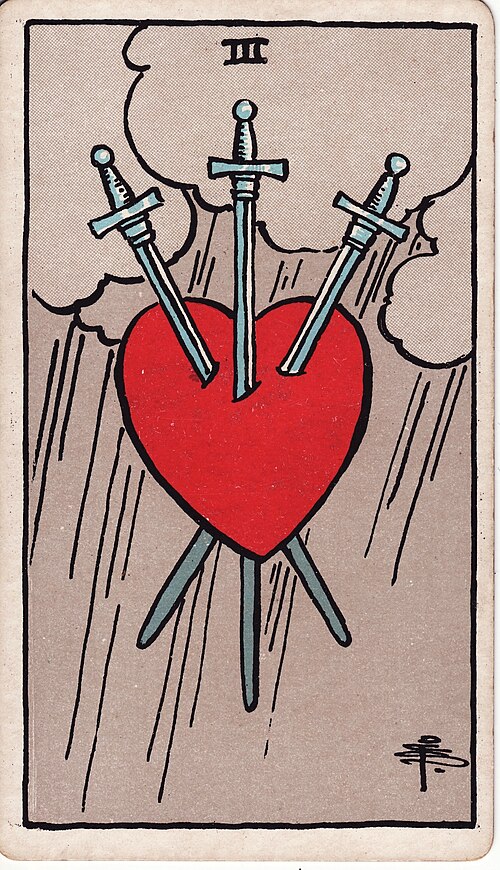
Three of Swords Rider-Waite-Smith tarot card
53Minor Arcana

Three of Swords

Upright
the Three of Swords often marks an experience that cannot be improved by pretending it is harmless. Its core dynamic is contact with disappointment, grief, separation, criticism, or a truth that disrupts a preferred story.
Reversed
the Three of Swords does not automatically mean that everything is fine or that pain is worse. It can show blockage when a person cannot admit what has hurt, internalization when the conflict has turned into private self-criticism, excess when analysis becomes compulsive…
Read the complete card guide →
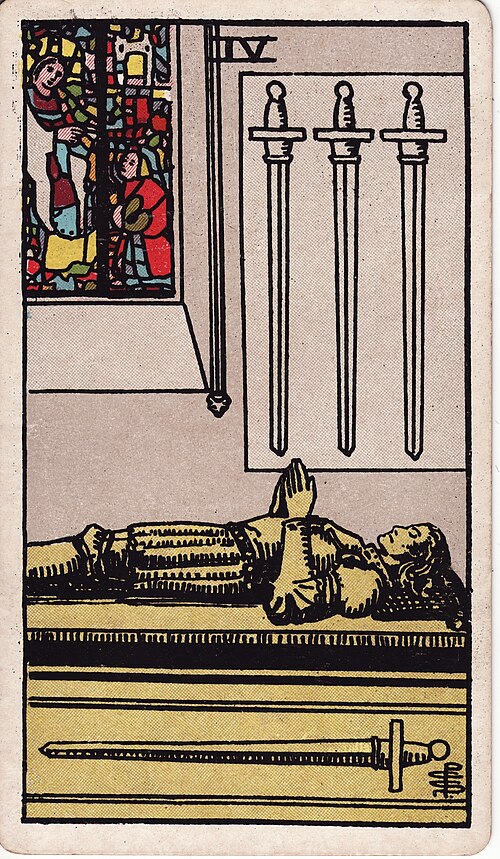
Four of Swords Rider-Waite-Smith tarot card
54Minor Arcana

Four of Swords

Upright
the Four of Swords describes a useful interval between mental strain and renewed engagement. Its core dynamic is suspension with purpose: step back, reduce input, protect attention, and allow a decision to mature.
Reversed
the Four of Swords can reveal a blockage around rest itself. It may show internalization when every concern is kept private, excess withdrawal when solitude becomes disconnection, delay when preparation has become indefinite postponement, or restless overactivity that…
Read the complete card guide →
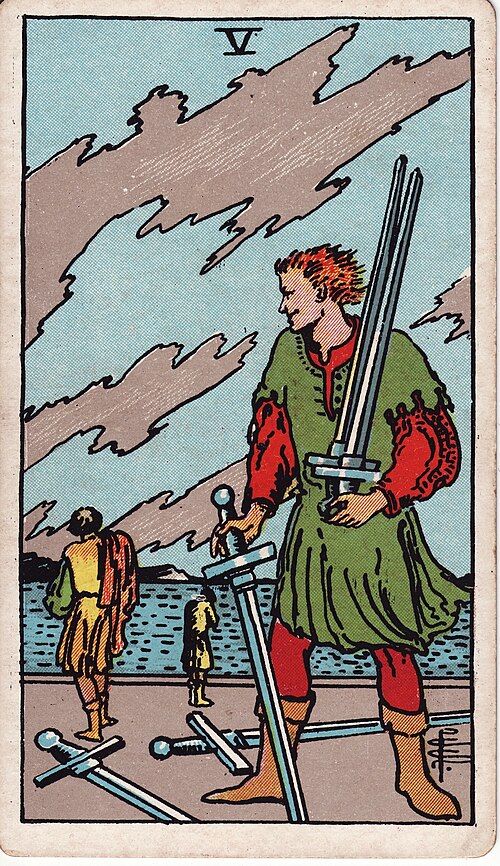
Five of Swords Rider-Waite-Smith tarot card
55Minor Arcana

Five of Swords

Upright
the Five of Swords can describe a contest in which someone gains leverage but the group loses trust. It may point to an argument, a sharp negotiation, a difficult truth, or a choice to stop participating.
Reversed
does not automatically mean defeat or moral failure. As blockage, it can show an unnamed conflict, a fear of losing face, or an inability to admit that a contest has ended.
Read the complete card guide →
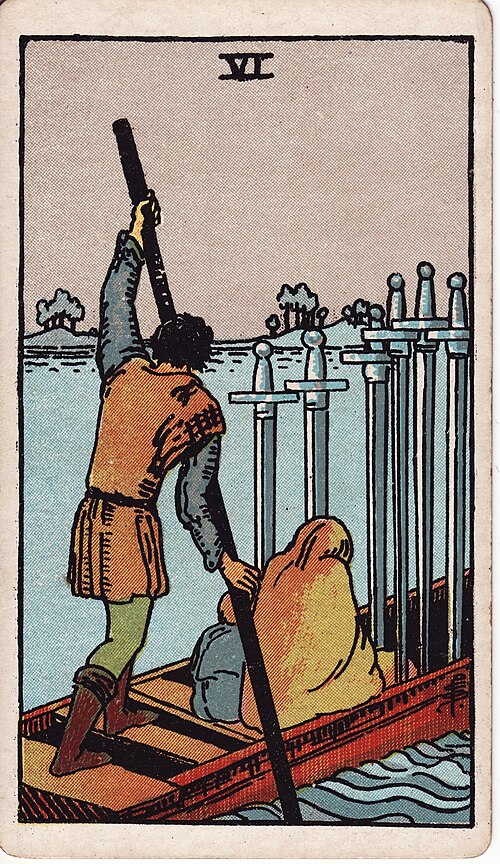
Six of Swords Rider-Waite-Smith tarot card
56Minor Arcana

Six of Swords

Upright
the Six of Swords often describes a deliberate move away from mental turbulence toward a more manageable situation. It can be physical travel, a change of team, a new study method, a boundary that creates distance, or an internal shift in how a difficult experience is…
Reversed
does not automatically mean failure. As blockage, it can show being unable to leave a draining pattern, lacking a safe route, or trying to move without enough practical support.
Read the complete card guide →
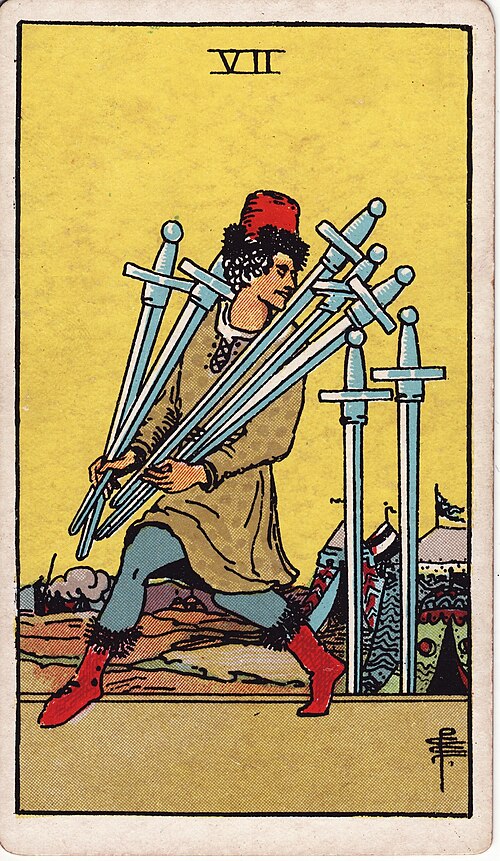
Seven of Swords Rider-Waite-Smith tarot card
57Minor Arcana

Seven of Swords

Upright
the Seven of Swords often describes a situation that rewards careful planning, discretion, and a realistic appraisal of what can be carried forward. Its strength is flexible intelligence: identify the essential tools, avoid a needless contest, protect confidential…
Reversed
the Seven of Swords does not automatically mean confession, exposure, or moral failure. It may show blockage around strategy: too many moving parts, fear of being seen, or an avoidance plan that no longer works.
Read the complete card guide →
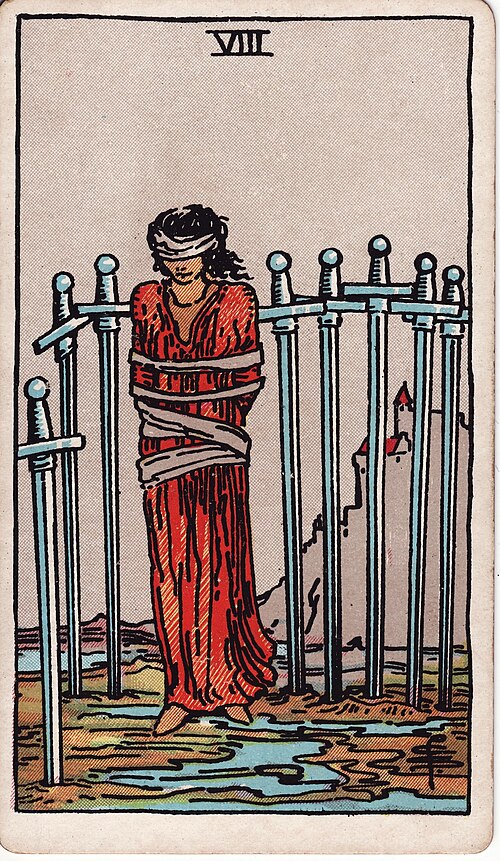
Eight of Swords Rider-Waite-Smith tarot card
58Minor Arcana

Eight of Swords

Upright
the Eight of Swords describes a narrowed field of action. A person may be constrained by policy, money, timing, another person's power, a physical environment, or a repeated thought pattern.
Reversed
the Eight of Swords is not automatically a happy release or proof that the problem was self-created. It may show blockage becoming more internal: the person is physically able to act but cannot yet trust their judgment, ask for help, or imagine an alternative.
Read the complete card guide →
Nine of Swords Rider-Waite-Smith tarot card
59Minor Arcana

Nine of Swords

Upright
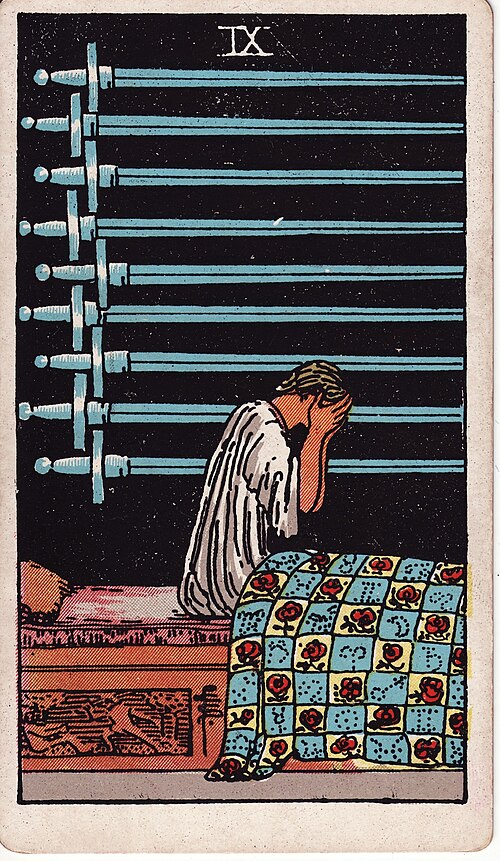
the Nine of Swords can describe a mind caught in repetition: replaying a conversation, rehearsing a feared outcome, or turning one unresolved issue into a total judgment of the self. Its strength is diagnostic in the ordinary sense of noticing a problem clearly, not medical…
Reversed
the Nine of Swords does not automatically mean that everything is fine or that the difficulty is worse. It may show blockage when worry cannot be spoken, internalization when the person hides distress behind a competent exterior, excess when self-criticism becomes…
Read the complete card guide →
Ten of Swords Rider-Waite-Smith tarot card
60Minor Arcana

Ten of Swords

Upright
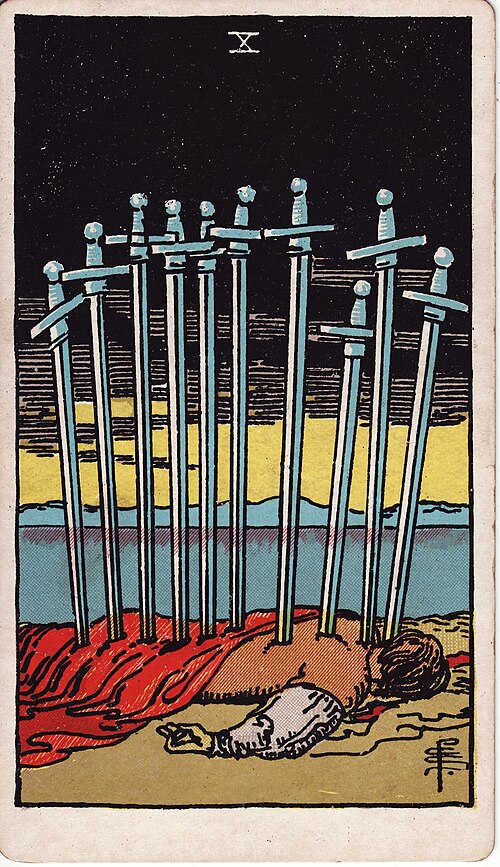
the Ten of Swords can show that a strategy, conflict, belief, or chapter has reached its limit. Its difficult strength is clarity: once the ending is acknowledged, energy no longer has to be spent pretending that the same arrangement can continue unchanged.
Reversed
the Ten of Swords is not automatically an improvement or a worse omen. It may show blockage when a necessary ending cannot be accepted, internalization when the person carries defeat privately, excess when the language of ruin has become a habit, delay when an old situation…
Read the complete card guide →
Page of Swords Rider-Waite-Smith tarot card
61Minor Arcana

Page of Swords

Upright
the Page of Swords highlights a mind that is awake and willing to investigate. Its strength is honest curiosity: ask a precise question, gather the relevant facts, listen for the exact wording, and notice what has not been said.
Reversed
the card does not automatically mean bad news or dishonesty. It can show a blockage in speaking or studying, information that is difficult to access, or a person who is not ready to express what they notice.
Read the complete card guide →
Knight of Swords Rider-Waite-Smith tarot card
62Minor Arcana

Knight of Swords

Upright
the Knight of Swords can be the energy needed to make a clear decision, send the important message, defend a principle, or begin a difficult piece of work. Its strength is focused courage: identify the central issue, state the aim, and act while the path is sufficiently clear.
Reversed
this card is not automatically a defeat or a sign of violence. It can show blocked momentum, an internalized argument, or a powerful idea that has nowhere safe and useful to go.
Read the complete card guide →
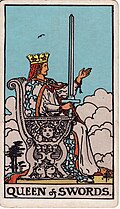
Queen of Swords Rider-Waite-Smith tarot card
63Minor Arcana

Queen of Swords

Upright
the Queen of Swords brings clear observation, precise language, and the courage to name what is actually known. Her strength is not harshness for its own sake; it is the ability to separate evidence from assumption and care from people-pleasing.
Reversed
does not automatically mean a bad person or a failed outcome. It may show a blockage in speaking plainly, or an internalized judgment that has not yet found a safe, constructive form.
Read the complete card guide →
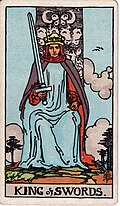
King of Swords Rider-Waite-Smith tarot card
64Minor Arcana

King of Swords

Upright
the King of Swords supports strategic thinking, fair standards, clear policies, and decisions that can be explained. His strength is disciplined judgment: he can listen, identify the relevant issue, distinguish principle from preference, and act without being swept away by…
Reversed
does not automatically mean malicious authority or certain failure. As blockage, the card can show indecision, unclear leadership, or an inability to translate principles into a workable decision.
Read the complete card guide →
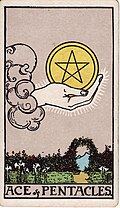
Ace of Pentacles Rider-Waite-Smith tarot card
65Minor Arcana

Ace of Pentacles

Upright
the Ace of Pentacles highlights a workable opening. It may describe a job lead, course, tool, budget, home matter, health-supporting routine, or relationship agreement that gives an idea a physical form.
Reversed
the Ace of Pentacles may show a blocked or poorly timed beginning. The opportunity can be real but inaccessible, vague, underfunded, or mismatched with current capacity.
Read the complete card guide →
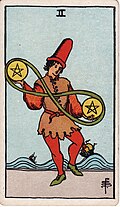
Two of Pentacles Rider-Waite-Smith tarot card
66Minor Arcana

Two of Pentacles

Upright
the Two of Pentacles describes active juggling. It can be useful when a person is coordinating work and study, two budgets, family and personal needs, or several stages of a practical project.
Reversed
the Two of Pentacles may indicate a blocked rhythm, internalized pressure, or a system that is carrying more than it can safely hold. Blockage can show up as missed deadlines, conflicting commitments, poor cash flow, or an inability to decide what matters first.
Read the complete card guide →
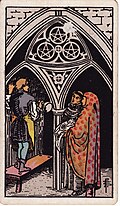
Three of Pentacles Rider-Waite-Smith tarot card
67Minor Arcana

Three of Pentacles

Upright
the Three of Pentacles describes constructive participation. A project improves when the right people contribute distinct abilities and agree on what good work looks like.
Reversed
this card does not automatically mean failure. It can show a useful skill being kept private, feedback being internalized, or a team process that needs redesign.
Read the complete card guide →
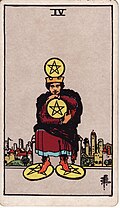
Four of Pentacles Rider-Waite-Smith tarot card
68Minor Arcana

Four of Pentacles

Upright
the Four of Pentacles often describes consolidation. Make a budget, preserve a reserve, protect your time, clarify ownership, or establish a boundary before taking on more.
Reversed
this card does not automatically mean reckless loss or generosity. It can show a grip loosening, a private fear becoming visible, or an internal struggle over control.
Read the complete card guide →
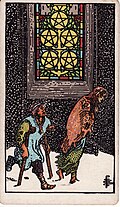
Five of Pentacles Rider-Waite-Smith tarot card
69Minor Arcana

Five of Pentacles

Upright
the Five of Pentacles often brings attention to a period of reduced capacity, financial pressure, loneliness, uncertain belonging, or a resource gap. Its strength is honesty: name the missing item instead of pretending that willpower solves everything.
Reversed
this card does not automatically mean that hardship has ended or that a rescue is coming. It can show a blocked route to support, private distress, an excess of self-denial, a delay in recovery, or a change in direction.
Read the complete card guide →
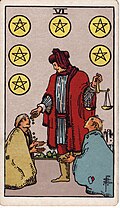
Six of Pentacles Rider-Waite-Smith tarot card
70Minor Arcana

Six of Pentacles

Upright
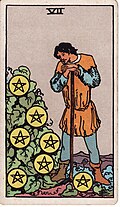
the Six of Pentacles often describes practical generosity, timely assistance, fair exchange, scholarships, mentoring, compensation, or a resource being redistributed. Its strength is responsiveness: identify a real need, offer what is sustainable, and make the terms clear.
Reversed
the Six of Pentacles can show a blocked exchange, support withheld, private shame about receiving, excessive giving, delayed approval, or a need to renegotiate the direction of resources. It does not automatically mean exploitation or failure.
Read the complete card guide →
Seven of Pentacles Rider-Waite-Smith tarot card
71Minor Arcana

Seven of Pentacles

Upright
the card describes a stage in which effort has produced evidence but not completion. Its strength is disciplined review: notice what is growing, measure it honestly, and decide what deserves another season of attention.
Reversed
the Seven of Pentacles does not automatically mean failure or loss. It can show a blockage in evaluation: impatience, discouragement, unclear measures, or a plan whose timing does not fit present conditions.
Read the complete card guide →
Eight of Pentacles Rider-Waite-Smith tarot card
72Minor Arcana

Eight of Pentacles

Upright
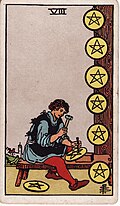
the Eight of Pentacles is the card of deliberate practice and useful competence. It favors showing up, breaking a large ambition into repeatable tasks, accepting instruction, and improving through feedback.
Reversed
the card does not automatically indicate incompetence or a bad result. It can reveal a blockage in learning: scattered attention, poor instruction, fear of being assessed, or a task broken into steps that are too vague.
Read the complete card guide →
Nine of Pentacles Rider-Waite-Smith tarot card
73Minor Arcana

Nine of Pentacles

Upright
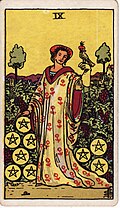
the Nine of Pentacles points to a result that can be enjoyed because something real has been practiced, protected, or built. It favors competence over display and sustainable comfort over a sudden windfall.
Reversed
the same image can show a blocked harvest, private doubt, dependence hidden behind a polished surface, or a need to change direction. Reversal is not automatically negative.
Read the complete card guide →
Ten of Pentacles Rider-Waite-Smith tarot card
74Minor Arcana

Ten of Pentacles

Upright
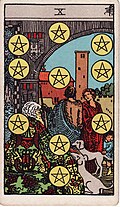
the Ten of Pentacles points to what can endure beyond a single moment or individual. It may describe family support, a stable institution, inherited knowledge, shared property, or a community whose rules and resources have accumulated over time.
Reversed
the Ten of Pentacles can show a blocked inheritance, unstable support, conflict over shared resources, or a system that looks established but no longer serves its members. It can be internalized when belonging is experienced as a private question of identity, security, or…
Read the complete card guide →
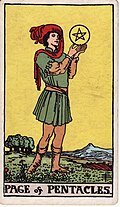
Page of Pentacles Rider-Waite-Smith tarot card
75Minor Arcana

Page of Pentacles

Upright
the Page of Pentacles points to learning that can become useful in the material world. It may describe a beginner taking a course, practicing a craft, examining a job or financial option, or making a modest but concrete start.
Reversed
the Page of Pentacles can show a blocked beginning, scattered attention, or a useful idea that has not found a workable routine. The theme may be internalized when someone is quietly learning but has not shown the work; excessive when preparation becomes perfectionism,…
Read the complete card guide →
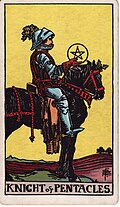
Knight of Pentacles Rider-Waite-Smith tarot card
76Minor Arcana

Knight of Pentacles

Upright
the Knight of Pentacles describes dependable effort, careful execution, and progress built through repetition. It is favorable for maintenance, long projects, training, routine, saving, quality control, and work that rewards patience.
Reversed
the Knight of Pentacles can indicate blocked progress, internalized pressure, excessive routine, delay, or a direction that needs adjustment. Blockage may appear as missed steps, fatigue, poor systems, or waiting for perfect certainty.
Read the complete card guide →
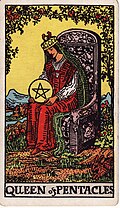
Queen of Pentacles Rider-Waite-Smith tarot card
77Minor Arcana

Queen of Pentacles

Upright
this card points to care that becomes tangible. It can describe making a home workable, managing time and money carefully, learning a useful craft, supporting someone without taking over, or giving a project the conditions it needs to grow.
Reversed
does not simply mean bad luck. It can show blockage around receiving or giving care, internalization of worry about safety or worth, excess concern with appearance or control, delay caused by depleted energy, or a needed adjustment in direction.
Read the complete card guide →
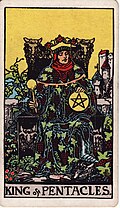
King of Pentacles Rider-Waite-Smith tarot card
78Minor Arcana

King of Pentacles

Upright
the King of Pentacles favors capable management and long-term reliability. He can describe a person who understands systems, a project that has reached operational maturity, or an invitation to make decisions based on evidence, maintenance, and realistic capacity.
Reversed
does not automatically mean ruin. It may indicate blockage in leadership or resource management, internalization of fear about loss or status, excess attachment to control, delay caused by weak foundations or unrealistic promises, or a direction adjustment from accumulation…
Read the complete card guide →
FREE REFERENCE FILES

Take the deck map with you.

Download the English quick reference as a spreadsheet-friendly CSV or a clean Markdown document. Both files link back to the detailed card pages for context.

CSV · 78 cardsMarkdown · 78 cards

QUICK QUESTIONS

Reading the 78-card system

Do I need to memorize all 78 tarot cards?

No. Learn the deck structure, recurring symbols, suits, numbers, and a few anchor cards. Comparison and documented practice build a more durable vocabulary than isolated memorization.

Does a reversed card always mean the opposite?

No. A reversal may show blockage, internalization, excess, delay, or a change of direction. The question, spread position, imagery, and neighboring cards decide which lens is useful.

Which tarot deck does this guide use?

This guide follows the Rider–Waite–Smith sequence and imagery, with Strength at VIII and Justice at XI. Other traditions may use different numbering, scenes, or interpretive priorities.